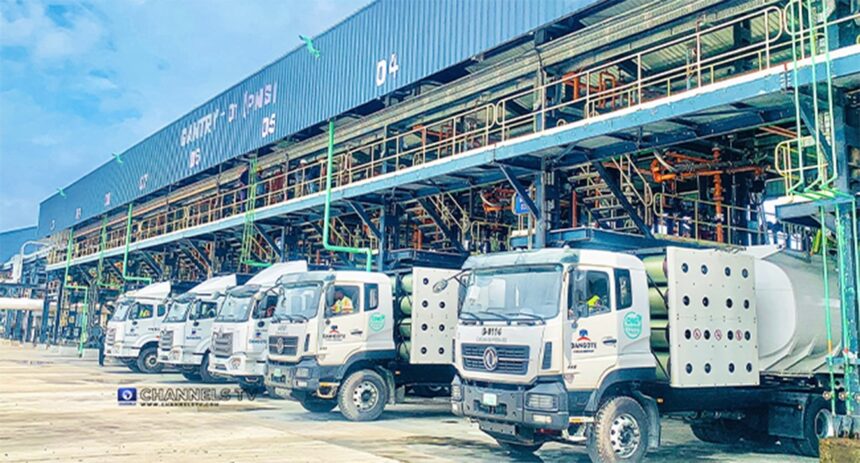
The Dangote Petroleum Refinery has announced the suspension of petrol sales in naira, a move that has unsettled marketers and heightened concerns over fuel pricing and foreign exchange pressure.
In a notice sent to customers at 6:42 p.m. on Friday, the refinery said the suspension would take effect from Sunday, September 28, 2025, citing the exhaustion of its crude-for-naira allocation.
The letter, signed by the Group Commercial Operations of Dangote Petroleum Refinery & Petrochemicals and titled “Suspension of DPRP PMS Naira Sales – Effective 28th September 2025”, explained that the company had exceeded its allocation under the naira-crude programme and could no longer sustain sales in local currency.
“All customers with PMS transactions in naira who would like a refund of their current payments should formally request the processing of their refund,” the notice added.
The development comes amid a lingering labour dispute, with unions accusing the refinery of terminating the employment of more than 800 Nigerian workers.
The Petroleum and Natural Gas Senior Staff Association of Nigeria (PENGASSAN) on Friday condemned the alleged mass sack, describing it as anti-labour and threatening nationwide solidarity actions if the matter is not addressed.
This is not the first time the refinery has halted local currency transactions. In March 2025, it briefly suspended naira sales, insisting that its crude-for-naira allocations were insufficient to meet growing domestic demand.
That decision triggered fears of fuel dollarisation and saw pump prices rise to nearly ₦1,000 per litre.
Analysts warn that the latest move could again destabilise the downstream sector. Chief Executive of Petroleumprice.ng, Jeremiah Olatide, said petrol prices could climb above ₦900 per litre if dollar transactions dominate supply, stressing that Dangote’s sales in naira had helped ease pump prices in recent months.
With the refinery considered a cornerstone of Nigeria’s energy security, industry observers caution that the twin crises of naira sales suspension and labour unrest could undermine government efforts to stabilise the fuel market under ongoing reforms.