•••Leaders use June 12 anniversary to advocate stronger democratic institutions and national security overhaul
Governor of Ondo State, Hon. Lucky Orimisan Aiyedatiwa, has declared that the state is fully prepared for the establishment of state police, as former Edo State Governor and Senator, Adams Oshiomhole, alongside elder statesman, Oba Olu Falae, called for far-reaching reforms to address Nigeria’s security challenges and strengthen democratic governance.
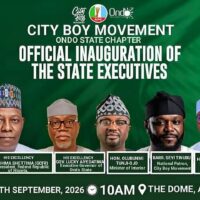
Speaking at the 33rd anniversary of the June 12, 1993 presidential election held at the International Centre for Culture and Events (The Dome), Akure, Governor Aiyedatiwa described June 12 as a defining moment in Nigeria’s democratic history and a symbol of credible elections, accountability and national unity.
He warned that insecurity poses a serious threat to democratic consolidation, stressing that citizens cannot freely participate in governance in an atmosphere of fear and violence.
The governor said democracy remains an evolving process that requires stronger institutions and sustained commitment to the rule of law.
Reaffirming his administration’s commitment to security under the OUR EASE Agenda, Aiyedatiwa disclosed that the Amotekun Corps had been strengthened through the introduction of medical allowances, enrolment into the Contributory Pension Scheme and the recruitment of 500 additional personnel.
Declaring Ondo State’s readiness for the proposed state police system, the governor said the necessary structures had already been put in place by the late former governor, Arakunrin Rotimi Akeredolu, and further enhanced by his administration.
“For us in Ondo State, we’ve been ready a long time. We have the structure, we have the people and all that is left is the approval of the needed weapons and equipment,” he stated.
He added that more sophisticated equipment would further enhance the effectiveness of security personnel in combating crime and maintaining peace.
Delivering a lecture at the event, Senator Adams Oshiomhole described June 12 as a symbol of courage, sacrifice and democratic resilience, paying glowing tribute to the late Chief MKO Abiola for defending his electoral mandate despite pressure from the military.
He said the annulled 1993 election demonstrated uncommon national unity, as Nigerians voted beyond ethnic and religious considerations.
According to Oshiomhole, the country has recorded notable democratic progress since 1999, citing reforms such as the introduction of the Bimodal Voter Accreditation System (BVAS) and legal provisions allowing elections to be suspended where technology fails.
He also defended ongoing scrutiny of the Nigerian National Petroleum Company Limited (NNPCL) by the National Assembly following audit reports alleging about ₦210 trillion in unaccounted funds, insisting that legislative oversight was necessary.
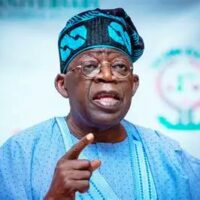
The former labour leader further endorsed President Bola Tinubu’s economic reforms, including subsidy removal and exchange rate unification, while describing the abolition of History as a school subject as a mistake that should be corrected.
In his remarks, the Olu-Abo of Ilu-Abo, Oba Olu Falae, recounted the sacrifices made during the June 12 struggle and warned against any return to military rule.
He said the annulment of the June 12 election sparked nationwide resistance and led to the emergence of the National Democratic Coalition (NADECO), whose sustained struggle eventually paved the way for the restoration of democratic rule.
Falae noted that many pro-democracy activists endured detention, exile and even death in pursuit of democratic ideals, urging Nigerians to protect and strengthen the nation’s democratic institutions.
Earlier, the Chief of Staff to the Governor, Prince Segun Omojuwa, described June 12 as a symbol of hope and unity and called on Nigerians to remain committed to defending democratic values against insecurity, institutional distrust and civic apathy.
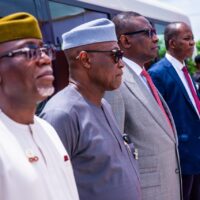
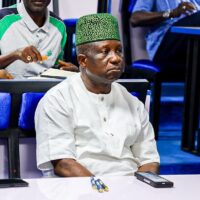
The event was attended by the Deputy Governor, Dr. Olayide Adelami, Speaker of the Ondo State House of Assembly, Rt. Hon. Olamide Oladiji, members of the State Executive Council, traditional rulers, religious leaders, labour leaders and heads of security agencies.