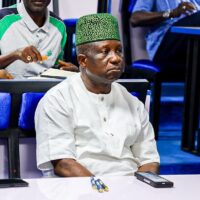
The Economic and Financial Crimes Commission (EFCC) has secured a major legal victory after the Federal High Court in Abuja ordered the final forfeiture of 48 properties linked to former Attorney-General of the Federation and Minister of Justice, Abubakar Malami (SAN), to the Federal Government.
The judgment, delivered on Wednesday by Justice Joyce Abdulmalik, followed months of legal proceedings in which the anti-graft agency argued that the assets were reasonably suspected to have been acquired with proceeds of unlawful activities.
Among the forfeited assets are Rayhaan University in Kebbi State, including its permanent, temporary and third campuses, the Vice Chancellor’s residence, Rayhaan Radio, Rayhaan Agro Allied Factory, and several other commercial and residential properties spread across Abuja, Kebbi and Kano States.
The court also ordered the forfeiture of luxury hotels, high-value residential buildings, commercial plazas, warehouses, filling stations, agricultural lands, shopping complexes, and hospitality businesses allegedly linked to the former minister. Also affected are Azbir Hotel, Zeennoor Hotel, Azbir Arena, a printing press, pharmacy, supermarket, factory equipment, staff quarters, and hundreds of hectares of land.
Justice Abdulmalik ruled that the EFCC successfully demonstrated that the properties were reasonably suspected to be proceeds of unlawful activities and that those challenging the forfeiture failed to provide credible evidence showing that the assets were acquired through legitimate sources of income.
According to the court, merely claiming ownership of the properties was insufficient under Nigeria’s non-conviction-based asset forfeiture laws. The respondents, the judge held, were required to establish the lawful origin of the funds used to acquire the assets but failed to discharge that burden.
The forfeiture proceedings began on January 6, 2026, when the Federal High Court granted the EFCC an interim forfeiture order following an ex parte application. In compliance with the court’s directive, the Commission published the order in national newspapers, inviting any interested persons to contest the forfeiture.
In response, Malami, alongside 14 family members and associates, challenged both the court’s jurisdiction and the interim forfeiture order, urging the court to dismiss the EFCC’s application. Following the hearing of all parties, the matter was reserved for judgment.
Delivering its final decision, the court dismissed the objections and granted the EFCC’s application, permanently transferring ownership of all 48 properties to the Federal Government.
The judgment represents one of the most significant non-conviction asset forfeiture cases in Nigeria’s recent anti-corruption campaign, with the assets comprising educational institutions, media organisations, hotels, factories, commercial facilities and prime real estate worth billions of naira.
Abubakar Malami has denied wrongdoing in relation to the case, and the forfeiture proceedings were civil (non-conviction-based) rather than a criminal conviction. He retains the right to challenge the judgment through the appellate courts.