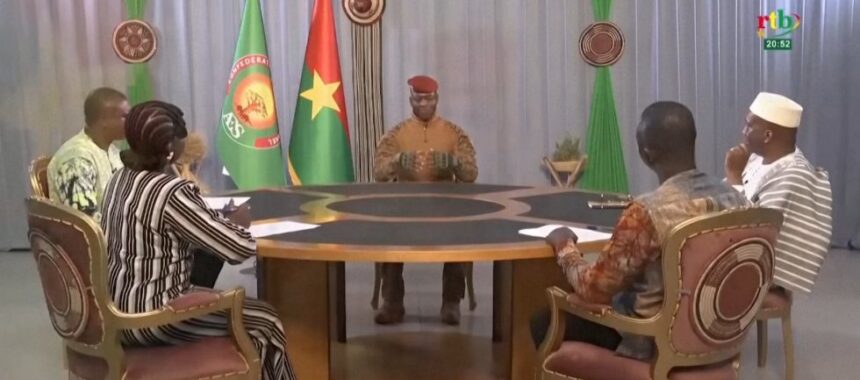
Burkina Faso’s President, Ibrahim Traoré, has stirred fresh controversy after declaring that the country should “forget the issue of democracy,” describing it as harmful and akin to “slavery.”
Speaking in a televised interview on Thursday, the military leader said his administration is focused on what he described as a “conquest, refoundation, and revolution,” reinforcing the junta’s shift away from democratic governance. His remarks come barely two months after authorities dissolved all political parties in the country.
Traoré, who came to power following the 2022 Burkina Faso coup, had earlier pledged to restore civilian rule through elections by 2024 or sooner. However, recent developments suggest a consolidation of military control.
Burkina Faso’s political trajectory mirrors that of its Sahel neighbours, Mali and Niger, which also experienced military takeovers in 2020 and 2023 respectively. The three nations have since exited the Economic Community of West African States (ECOWAS) and formed a new alliance known as the Alliance of Sahel States.
Military governments in the region initially gained popular support by promising to tackle long-standing insecurity fueled by Islamist insurgencies. Despite these assurances, the situation in Burkina Faso has continued to deteriorate.
According to recent estimates, more than 60 percent of the country remains outside government control, while over 2.1 million people have been displaced. Nearly 6.5 million citizens are in urgent need of humanitarian assistance.
Data from the Armed Conflict Location & Event Data Project indicates that at least 10,600 civilians have been killed since 2016, underscoring the severity of the ongoing crisis.
Analysts warn that the latest remarks by President Traoré could heighten tensions with regional and international stakeholders, while raising concerns about the future of governance and stability in the Sahel.