Former Attorney General and Commissioner for Justice in Ondo State, Chief Wole Olanipekun (SAN), has credited the emergence of Ondo as an oil-producing state to visionary leadership, strategic sacrifices and collaborative governance, warning that neglecting historical lessons and elder counsel could hinder future development.
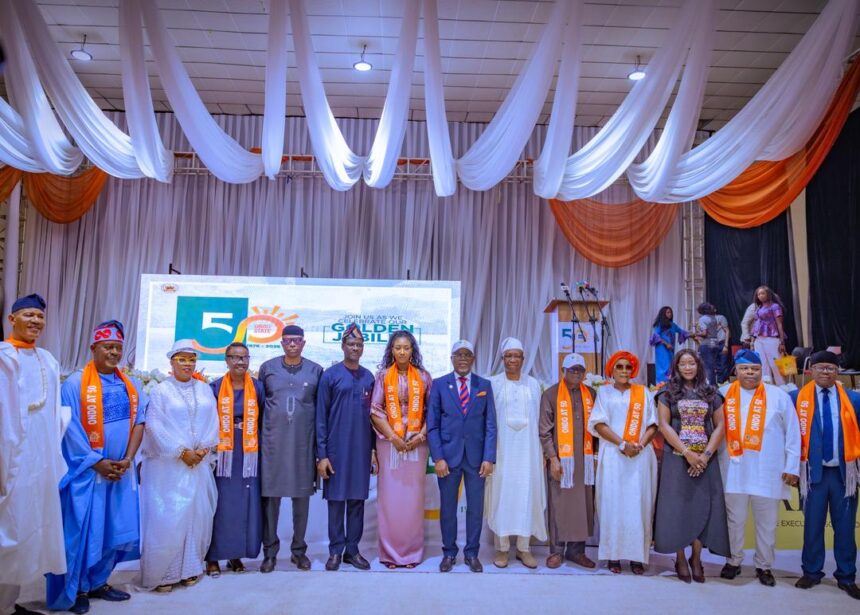
Olanipekun made the remarks on Monday at the International Centre for Culture and Events (The Dome), Akure, during a Golden Jubilee public lecture themed “Ondo State: Yesterday, Today and Tomorrow.”
He recalled the deliberate policy steps taken during the administration of Evangelist Bamidele Olumilua, noting that coordinated efforts among stakeholders led to the drafting of the decree that enabled the state to harness its hydrocarbon resources, positioning Ondo among Nigeria’s oil-producing states in the 1990s alongside Abia and Imo states.
He stressed that leadership demands humility, adherence to truth and respect for experience, adding that Ondo’s achievements were products of foresight, deliberate planning and sustained collaboration across successive administrations.
Declaring the lecture open, Governor Lucky Orimisan Aiyedatiwa described Ondo’s 50th anniversary as a turning point for shaping the state’s future through industrialisation, innovation and youth-driven growth.
He highlighted the transformation of Ondo from an agrarian economy into an emerging industrial hub, citing key projects such as the Sunshine Free Trade Zone, Golden Ceramics Industrial Plant, Ore Ethanol Plant and the proposed Ondo Deep Sea Port as strategic drivers of economic expansion and export development.
The governor also emphasised tourism and culture as vital economic pillars, referencing coastal and eco-tourism initiatives designed to stimulate entrepreneurship and boost local economies.
He noted that ongoing investments in road networks, bridges and energy projects, including the Onyearugbulem–Irese Bridge, were improving connectivity and facilitating trade across the state.
Governor Aiyedatiwa further underscored youth empowerment as central to sustainable development, stating that scholarships, vocational training, digital literacy programmes and innovation hubs were being deployed to prepare young people for global competitiveness.
He also acknowledged the contributions of the Ondo diaspora, describing their expertise and investment potential as critical to accelerated development.
In her keynote address, the Special Adviser to the President on Energy, Mrs Olu Verheijen, praised the role of farmers, teachers, artisans, civil servants and entrepreneurs in building the state. She highlighted gas infrastructure projects, the revival of the Odigbo power plants and modular LNG initiatives as key catalysts for industrial growth.
Verheijen also noted that major infrastructure projects, including the Lagos–Calabar Coastal Highway, road expansions in Akure, hospital upgrades and the deep sea port project, would generate employment and enhance revenue generation.
Guest lecturer and Chairman of the Presidential Committee on Fiscal Policy and Tax Reforms, Prof. Taiwo Oyedele, commended Ondo’s founding fathers for promoting education and innovation, which he said produced globally recognised leaders. He announced a Golden Jubilee scholarship of ₦500,000 for the best graduating student in every public secondary school in the state this year.
Prof. Oyedele also highlighted Ondo’s vast economic potential, citing its fertile land, 180-kilometre coastline, Idanre Hills tourism assets and significant bitumen reserves.
He noted that ongoing industrialisation, infrastructure expansion and cultural tourism development were repositioning the state’s economy, while the Agenda 2076 development blueprint aims to create a diversified, knowledge-driven future.
Secretary to the State Government and Chairman of the Anniversary Planning Committee, Dr Taiwo Fasoranti, described the celebration as nostalgic and historic, revealing that eminent citizens, including elderly statesmen, would be honoured during the festivities.
The event was attended by top government officials, traditional rulers, political leaders, elder statesmen and other dignitaries from within and outside the state.