Fresh tension has enveloped Nigeria’s security community following the arrest and detention of 16 senior military officers by the Defence Intelligence Agency (DIA) over an alleged plot to overthrow the administration of President Bola Ahmed Tinubu.
According to an exclusive investigation by Premium Times, the detained officers comprise 14 from the Nigerian Army, one from the Navy, and one from the Air Force, with a majority reportedly drawn from the northern part of the country.
List of Detained Officers and Their Backgrounds
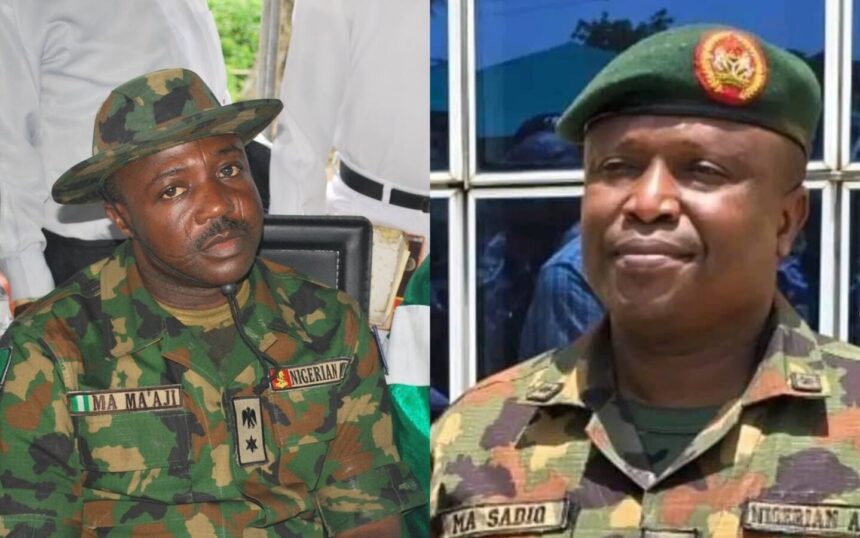
- Brigadier General Musa Abubakar Sadiq – believed to be from Kano State, identified as the alleged ringleader.
- Colonel M.A. Ma’aji – reportedly from Borno State, described as a key strategist in the group.
- Lt. Colonel S. Bappah – hails from Yobe State.
- Lt. Colonel A.A. Hayatu – from Katsina State.
- Lt. Colonel P. Dangnap – from Plateau State.
- Lt. Colonel M. Almakura – from Nasarawa State.
- Major A.J. Ibrahim – from Kano State.
- Major M.M. Jiddah – from Borno State.
- Major M.A. Usman – from Bauchi State.
- Major D. Yusuf – from Kaduna State.
- Major I. Dauda – from Adamawa State.
- Captain Ibrahim Bello – from Kano State.
- Captain A.A. Yusuf – from Sokoto State.
- Lieutenant S.S. Felix – from Benue State.
- Lieutenant Commander D.B. Abdullahi (Navy) – from Kano State.
- Squadron Leader S.B. Adamu (Air Force) – from Gombe State.
Security sources confirmed that 12 of the 14 Army officers belong to the Infantry Corps, while the rest serve in Signals and Ordnance, indicating deep penetration across key combat formations.
The report further stated that the arrests were made quietly across different locations as part of a broader counter-intelligence operation. The Defence Headquarters has so far declined to issue an official statement, describing the matter as an “internal disciplinary process” pending investigation.
Analysts say the development has raised fresh concerns within the military, especially as all the detained officers reportedly come from the same northern region, sparking discussions about internal cohesion and loyalty in the armed forces.
It also suggested that the alleged regional conspiracy may not be unconnected with recent restructuring within the Armed Forces, particularly President Tinubu’s effort to ensure a balanced spread of military appointments across all regions.
As investigations continue, the officers are expected to face interrogation and possible court-martial in the coming weeks.
It will be recalled that in recent years, a wave of successful coups has swept across West Africa, with military takeovers recorded in Niger, Burkina Faso, and Mali.
These developments have raised growing concerns about democratic stability in the region. Observers warn that, in light of these events, Nigeria must remain vigilant and proactive in safeguarding its democratic institutions and ensuring that the armed forces remain loyal to constitutional authority.