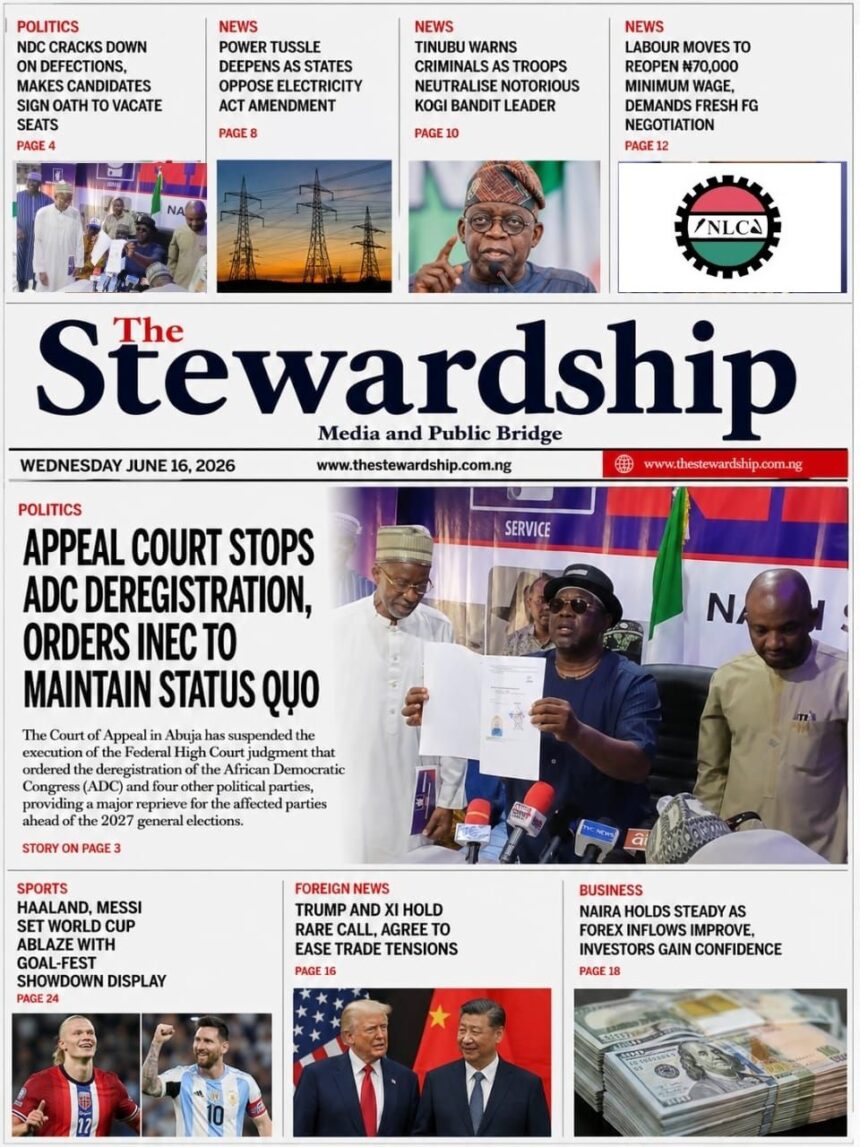
The Nigeria Democratic Congress (NDC) has unveiled a stringent anti-defection policy aimed at curbing the growing culture of political cross-carpeting, making it compulsory for all its candidates seeking elective offices to sign indemnity and affidavit forms pledging to relinquish their mandates should they defect from the party after winning elections.
The party’s National Chairman, Moses Cleopas, announced the new measure at the party’s national secretariat in Abuja, describing it as a bold step towards preserving party ideology, discipline and the sanctity of the mandate given by the electorate.
According to him, the decision was necessitated by the recurring trend of politicians who secure electoral victories on the platform of one party only to switch allegiance to rival political parties after assuming office.
Cleopas said the party would no longer tolerate what he described as the “commercialisation of political mandates,” stressing that elected officials must remain accountable to the platform and ideals that brought them to power.
He explained that the indemnity and affidavit forms would serve as legally binding documents, compelling office holders elected on the party’s platform to vacate their seats if they decide to abandon the party.
The NDC chairman noted that the policy was designed to strengthen internal democracy and reassure party faithful that their sacrifices and support would not be betrayed by elected representatives seeking personal political gains.
The development is expected to shape the party’s preparations for the 2027 general elections, with governorship, National Assembly and other candidates required to comply with the directive before securing the party’s tickets.
Political observers say the move represents one of the toughest anti-defection mechanisms introduced by any political party in the country, coming amid increasing concerns over frequent defections that have altered the political landscape and weakened opposition parties in recent years.
The party expressed confidence that the new policy would deepen loyalty among its members and contribute to building a stable and ideologically driven political institution capable of offering Nigerians a credible alternative in the years ahead.