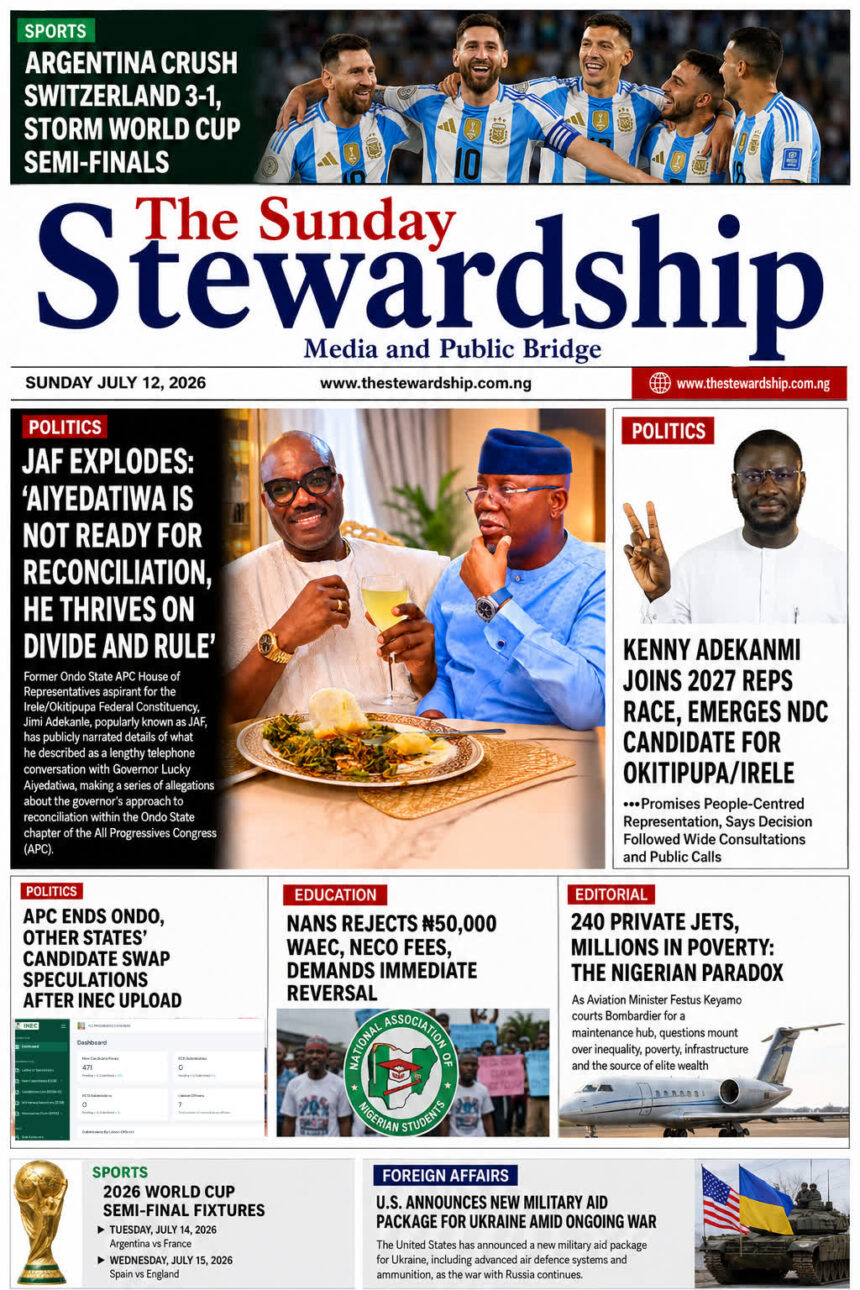
As Aviation Minister Festus Keyamo courts Bombardier for a maintenance hub, questions mount over inequality, poverty, infrastructure and the source of elite wealth.
Nigeria’s status as the country with the largest private jet fleet in Africa has ignited fresh national debate after Minister of Aviation and Aerospace Development, Festus Keyamo, announced that he led major Nigerian private jet operators to Montreal, Canada, to meet with Bombardier Inc. over plans to establish a regional aircraft maintenance and service centre in Nigeria.
According to the minister, nearly 240 private jets are currently operating in Nigeria, making it the continent’s largest private aviation market, with millions of dollars leaving the country annually for overseas aircraft maintenance.
The announcement has, however, revived uncomfortable questions about economic inequality in a nation where the World Bank estimates GDP per capita at about $1,224 in 2025, while more than 60% of Nigerians are estimated to be living below the national poverty line following worsening inflation and declining purchasing power.
The World Bank also notes that an additional 7 million Nigerians fell into poverty in 2025, underscoring the country’s widening social and economic challenges.
Critics argue that the contrast is difficult to ignore. Despite being Africa’s largest private jet market, Nigeria continues to grapple with chronic electricity shortages, inadequate healthcare facilities, poor road infrastructure, underfunded education, insecurity, rising living costs and limited social protection for vulnerable citizens.
The World Bank further observes that infrastructure gaps, weak job creation and limited state capacity continue to constrain economic growth and citizens’ welfare.
While official labour statistics based on the ILO methodology place Nigeria’s unemployment rate at about 3.1%, many economists caution that this figure masks widespread underemployment, low quality informal jobs, weak minimum wage and labour force participation.
The World Bank estimates that about 3.5 million Nigerians enter the labour force every year, yet job creation has struggled to keep pace, leaving many young people without stable or productive employment.
Ownership of private jets in Nigeria is largely concentrated among wealthy business executives, politicians, religious leaders and a handful of high net worth individuals.
Over the years, several aircraft owners have faced corruption investigations or public scrutiny over their sources of wealth.
While allegations against many individuals have not resulted in criminal convictions or been proven in court, media reports and public discourse have frequently linked luxury private aviation to concerns about corruption, unexplained wealth and the concentration of national resources among a small elite.
Such perceptions remain matters of public debate rather than established legal fact.
Political observers also note that some prominent Nigerian politicians, including past and present presidential candidates, governors, and high profile government functionaries have been reported to own at least one or more private jet, reinforcing public perceptions of an expanding luxury class existing alongside widespread economic hardship.
The debate has been further fuelled by recent anti-corruption developments.
Just weeks ago, a Federal High Court ordered the final forfeiture of a Hawker 125 private jet to the Federal Government after the Economic and Financial Crimes Commission (EFCC) established that it was acquired with funds allegedly diverted through fraud, corruption and money laundering linked to the Maiduguri Emergency Power Project.
The court ruled that the company claiming ownership failed to demonstrate the lawful origin of the funds used to purchase the aircraft, while investigators alleged that money meant for a public infrastructure project was ultimately routed towards the acquisition of the luxury jet.
The case, involving Abdulsalam Mustapha Kachallah, remains one of the latest examples reinforcing public concerns over how proceeds allegedly diverted from government projects have sometimes been used to finance luxury assets rather than public development.
Supporters of the proposed Bombardier maintenance facility argue that local servicing would reduce foreign exchange outflows, create highly skilled aviation jobs and position Nigeria as West Africa’s leading aviation maintenance hub.
Yet many Nigerians insist that the larger issue is not the existence of private jets, but the stark inequality they represent in a country where millions struggle to afford food, healthcare, education and basic transportation.
The growing debate ultimately raises a broader national question: How does a country with one of Africa’s largest populations living in poverty simultaneously sustain the continent’s largest fleet of private jets?
For many citizens, the answer lies at the heart of Nigeria’s long-running conversation about governance, wealth distribution, accountability and inclusive economic development.