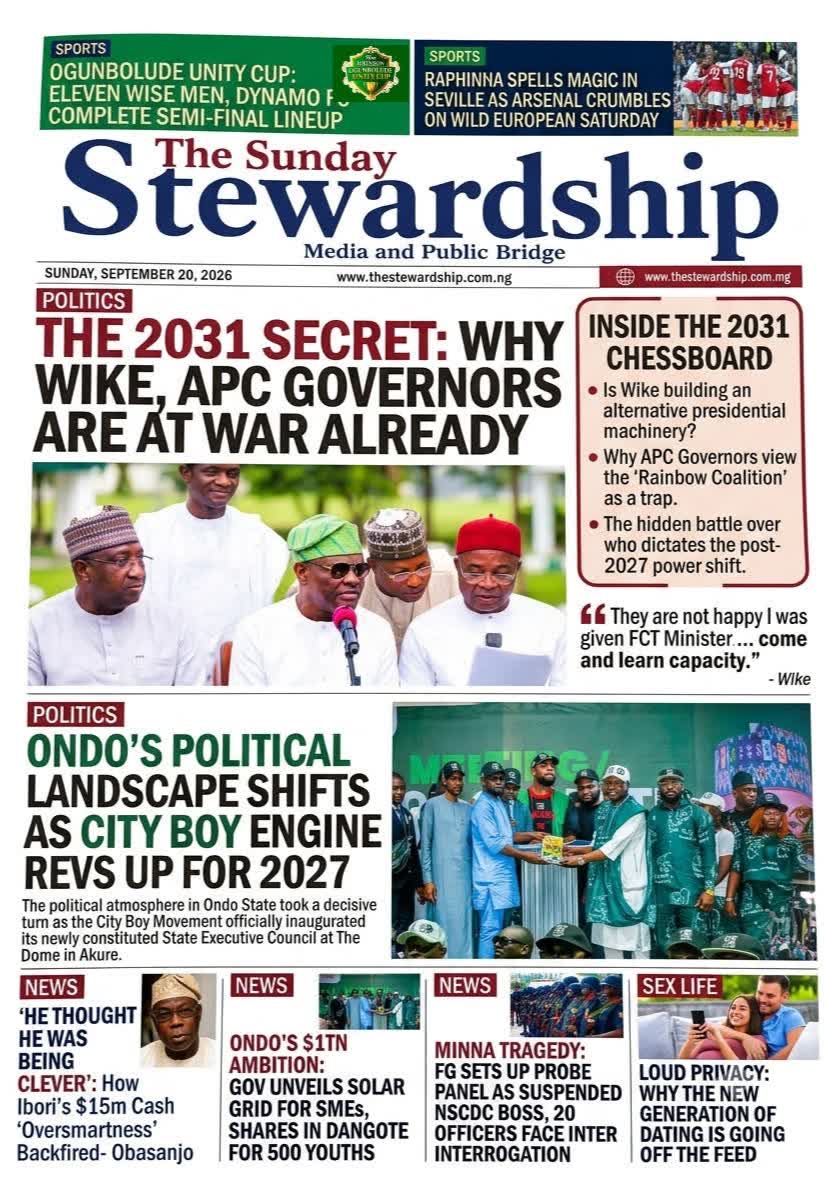
•••Beyond 2027: How control of state structures, Uzodimma’s Senate bid, and post-Tinubu succession ignited an early battle for the political soul of Nigeria.
What began as a simmering ideological friction over party boundaries inside the ruling establishment has officially exploded into an all-out political war.
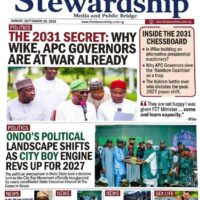
The fiery public exchange between the Minister of the Federal Capital Territory (FCT), Nyesom Wike, and key figures within the All Progressives Congress (APC) Progressive Governors’ Forum (PGF), principally Imo State Governor Hope Uzodimma and Kwara State Governor AbdulRahman AbdulRazaq, has sent shockwaves through Nigeria’s political landscape.
While the public feud is being fought over Wike’s controversial “Rainbow Coalition”- a cross-party vehicle designed to mobilize non-APC votes for President Bola Ahmed Tinubu while fielding alternative candidates for sub-national races, political insiders confirm that 2027 is merely the front line.
The true prize driving this battle is the post-Tinubu political succession of 2031, the scramble for the Vice-Presidential ticket, and the fight to control the 11th National Assembly.
The Explosion: “Politically Lazy” vs. “100% Party Loyalty”
The confrontation escalated following a closed-door meeting of the Progressive Governors’ Forum in Abuja. Led by its Chairman, Governor Hope Uzodimma, the forum issued a firm resolution categorically rejecting Wike’s Rainbow Coalition, declaring that APC governors would not tolerate parallel political structures or divided loyalty.
”The governors’ campaign commitment is exclusively to all APC candidates at all levels,” Uzodimma asserted, making it clear that the party machinery would not support any arrangement that weakens APC’s governorship, senatorial, or legislative candidates.
Wike retaliated sharply, branding the APC governors “politically lazy” and accusing them of hiding behind President Tinubu to mask their local political weaknesses.
”I said I will support the President from day one. I never told Mr. President I will join APC. Go and ask him. If I want to join APC, it’s not people like Hope who will tell me to join APC. In fact, he is lucky I’m not in APC because I wouldn’t take that kind of rubbish he is doing in APC,” Wike fired back.
Singling out Governor AbdulRazaq, Wike quipped: “Anytime he sees a snake, it’s Wike. Anytime he sees any reptile, it’s Wike… I have never seen people who would choose to spend time on gossip rather than doing the work they have been given.”
The Root Cause: Cabinet Resentment and the Rivers Crisis
Beneath the rhetoric lies deep-seated resentment over ministerial placements and state party machinery. Wike publicly revealed that the hostility from APC governors did not start overnight, tracing it back to President Tinubu’s decision to assign him the powerful FCT Ministry, a slot APC loyalists felt belonged exclusively to a party member.
Wike also accused the governors of actively meddling in his rift with his successor, Rivers State Governor Siminalayi Fubara.
”During the crisis with my governor, they misled my governor. They couldn’t give the governor a second term,” Wike stated, alleging that APC governors privately encouraged Fubara to turn against him while collecting funds under the guise of mediating.
The 2031 Factor: The Vice Presidency and the National Assembly
While 2027 remains an immediate milestone, intelligence from within political circles reveals that both camps are aggressively positioning themselves for 2031, when the presidency is expected to return to Northern Nigeria, leaving the Vice Presidency zoned to the South.
1. Wike’s Vice-Presidential Ambition & The Ghost of 2023
Political strategists close to the FCT Minister reveal that Wike’s insistence on building and maintaining a cross-party “Rainbow Coalition” across the South-South and Middle Belt is part of a calculated strategy to keep himself indispensable ahead of 2031.
It will be recalled that in the buildup to the 2023 presidential election, Wike was widely recommended by a PDP strategy panel for the Vice-Presidential slot. However, former Vice-President Atiku Abubakar bypassed Wike in a move many described as a betrayal, opting instead for then-Delta State Governor Ifeanyi Okowa.
That betrayal altered the course of Nigeria’s political history, sparking the rebellion of the PDP G5 governors that ultimately handed victory to Bola Tinubu. Insiders confirm that Wike has not abandoned his Vice-Presidential ambition for 2031. Knowing that APC governors will try to shut him out of official APC delegate lists, Wike is carving out an independent multi-party force that no presidential candidate in 2031 can ignore.
2. Uzodimma’s Senate Presidency & 2031 Calculation
On the other side of the divide, Governor Hope Uzodimma is executing a structured long-term agenda. Approaching the twilight of his second term in Imo State, Uzodimma is actively contesting for a Senatorial seat in 2027, eyeing the Senate Presidency in the 11th National Assembly.
By taking control of the Progressive Governors’ Forum, Uzodimma is working to position himself as the supreme political commander of the South-East. His goal is to lead a unified, governor-backed APC bloc into the 2031 power rotation, making himself the top choice for the Vice-Presidential slot. To achieve this, Uzodimma cannot allow Wike’s non-aligned coalition to dilute APC’s electoral dominance or create parallel power bases in the region.
Two Competing Models for Survival
Former Ekiti State Governor Ayo Fayose weighed in on the feud, defending Wike’s pragmatism: “If Rainbow Coalition works for Wike in Rivers and it can bring results, that’s all the president wants.”
Ultimately, this conflict represents a clash of two political models:
° The Governors’ Model: Strict party discipline where sitting governors control candidate nominations, state delegates, and National Assembly tickets to guarantee absolute control over future party primaries.
° The Wike Model: A fluid, result-driven cross-party mechanism that prioritizes presidential delivery over party cards, giving independent powerbrokers personal bargaining leverage for 2027 and 2031.
As the political calendar advances toward 2027, the war between Nyesom Wike and the APC Governors is no longer a simple cabinet squabble, it is the opening chapter of the battle for who will inherit executive power in 2031.