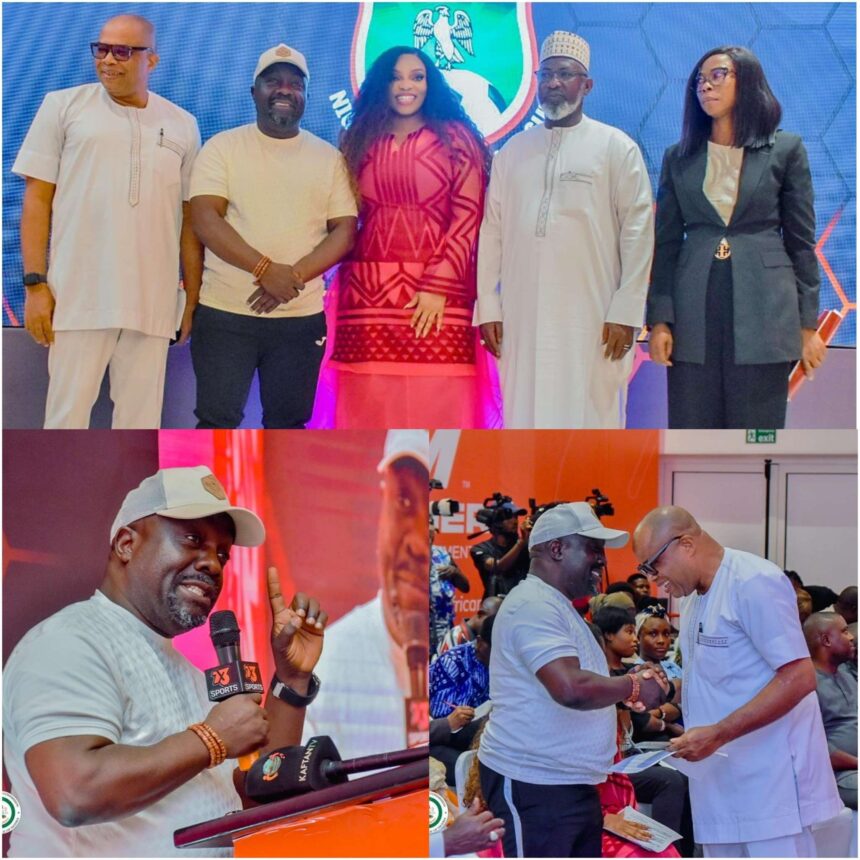
Toptier Sports Management has unveiled a landmark ₦40 billion, 10-year investment partnership with the Nigeria Women’s Football League (NWFL) and the Nigeria National League (NNL), in a move set to redefine the structure, funding, and global visibility of Nigeria’s domestic football leagues.
The strategic partnership, described as one of the most ambitious private-sector interventions in African football, is aimed at transforming the NWFL and NNL into professionally run, commercially sustainable, and internationally competitive leagues, with special focus on women’s football and talent development.
Speaking on the initiative, Founder of Toptier Sports Management, Chichi Nwoko, said the investment is focused on long-term institutional growth rather than short-term gains.
“This is about building systems that will outlive us. If African football is to command global respect, we must strengthen our domestic leagues, particularly women’s football and development pathways,” Nwoko said.
The Director-General of the National Sports Commission (NSC), Hon. Bukola Olopade, described the ₦40 billion commitment as a strong endorsement of ongoing reforms in the Nigerian sports sector.
“This investment is a clear vote of confidence in the reforms taking place across Nigerian sports. At the Commission, we are intentional about creating an environment where credible private investors can partner with government to build sustainable leagues, protect athlete welfare, and grow the sports economy,” Olopade stated.
Also reacting, President of the Nigeria Football Federation (NFF), Alhaji Ibrahim Gusau, welcomed the partnership, noting that it will significantly strengthen the domestic football ecosystem.
“This collaboration improves player welfare, enhances club operations, and creates clear development pathways, particularly for women and emerging talents. This is how we build a future-ready Nigerian football system,” Gusau said.
Nwoko further expressed appreciation to national sports authorities for their support, thanking the NSC and the NFF for their commitment to opening Nigerian football to transformative private-sector partnerships.
The decade-long partnership has since attracted widespread attention across Africa, with sports stakeholders describing it as a model for sustainable investment, league development, and economic growth in African football.