By Editor
History is full of reminders that among the three major ethnicity in Nigeria, Yoruba have carried some of the deepest scars in Nigeria’s political journey. From the First Republic to the era of military dictatorships and the long struggle for democracy, the Yoruba have paid a price that has shaped the nation itself.
Their leaders were assassinated, their icons jailed, their activists silenced , yet the region consistently chose stability over retaliation and unity over fragmentation.
The roll call is painful: the assassination of Ladoke Akintola and Dele Giwa, the imprisonment of Obafemi Awolowo, the detention and death of MKO Abiola, the brutal attack that led to the passing of Funmilayo Ransome-Kuti, and the repeated jailing of figures like Wole Soyinka, Olusegun Obasanjo, Beko Ransome-Kuti and Gani Fawehinmi.
These events were not isolated tragedies, they became symbols of a people who sacrificed greatly to keep Nigeria from tearing apart.
Yet today, a new kind of bleeding is unfolding , not in courtrooms or prison cells, but in ordinary communities. In Kwara State, armed bandits recently stormed a church during service, killing worshippers and abducting others. The attackers have now demanded an astonishing multibillion-naira ransom.
What once seemed like a distant northern crisis has now crossed into the Middle Belt and is edging toward the South-West, stirring fear in places that once believed themselves insulated from such terror.
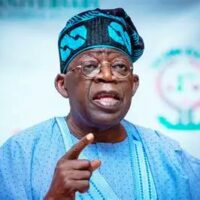
This is happening under the leadership of a Yoruba-born president, Bola Ahmed Tinubu, a man who himself endured political persecution in the fight for democracy. Yet even with one of their own at the helm, the Yoruba are now confronting a painful dilemma: How long must they continue to hold the country together while their own people become increasingly vulnerable?
Unity cannot survive on memory alone. Patriotism cannot remain a one-direction sacrifice. A nation that demands loyalty from its citizens must first guarantee their safety.
The Yoruba are not calling for division, they are calling for responsibility. They are asking for a Nigeria where every region is protected with equal urgency, where security is not negotiated with criminals, and where citizens do not live at the mercy of armed groups.
The question facing the nation is not emotional, it is existential:
How long can one region continue to bleed for unity while the state struggles to defend its own people?
Nigeria stands at a critical point. Either the government restores security with seriousness and sincerity, or the patience that once held the country together may begin to crumble under the weight of fear and fatigue.
The Yoruba have given their history, their leaders, and now their lives. The time has come for Nigeria to give something in return, protection, justice, and a future that does not demand constant sacrifice.
Unity must not be paid for in blood anymore. The message is simple:
If the center cannot longer hold, stop expecting endless endurance from those who have already given the most.