The Economic and Financial Crimes Commission (EFCC) has recorded its most high-impact month of legal victories, securing a historic wave of final forfeiture judgments that permanently strip former political heavyweights and top business elites of massive cash reserves and luxury assets.
A data analysis of the major rulings finalized in mid-July reveals that the anti-graft agency successfully secured the final forfeiture of assets and cash valued at a staggering ₦242,763,000,000 (two hundred and forty-two billion, seven hundred and sixty-three million naira).
Spanned across three major high-profile investigations, the recoveries represent an astronomical average of ₦80,921,000,000 (eighty billion, nine hundred and twenty-one million naira) per target profile.
Economists and legal experts tracking the recoveries utilized a uniform exchange benchmark of ₦1,400 per $1 USD to evaluate the multi-million dollar cash components alongside properties, corporate shares, and luxury goods scattered across the country.
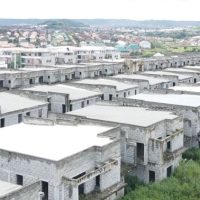
Leading the pack of high profile recoveries is the final forfeiture of over 40 prime properties linked to the former Attorney-General of the Federation and Minister of Justice, Abubakar Malami.
Justice Joyce Abdulmalik of the Federal High Court in Abuja dismissed all third-party objections, permanently vesting the ownership of commercial plazas, a university campus, luxury hotels, multi-bedroom duplexes, and factories into the hands of the Federal Government.
The tracking and recovery operation by the anti-graft agency originally targeted a suspected asset cluster valued at approximately ₦212.8 billion across Abuja, Kano, Kebbi, and Kaduna states.
Simultaneously, the Supreme Court delivered a crushing blow to the legal team of former Central Bank Governor, Godwin Emefiele.
A five-member panel of the apex court, led by Justice Ibrahim Saulawa, unanimously allowed the appeal of the EFCC and overturned an earlier appellate window that had ordered a retrial.
The judgment permanently strips the ex-CBN chief of $2.045 million in hard cash, which translates to ₦2,863,000,000 under the ₦1,400 benchmark.The judgment also legally secures substantial corporate share certificates and affirms the permanent forfeiture of seven ultra-luxury properties situated in Nigeria’s most expensive residential corridors, including Oyinkan Abayomi Drive and Probyn Road in Ikoyi, and Lekki Phase 1, Lagos.
The crackdown did not stop at political appointees. In the corporate and social sphere, Justice Jude Onwugbuzie of the FCT High Court in Apo ordered the final forfeiture of ₦8.9 billion worth of luxury assets and cash linked to prominent business mogul, Aisha Achimugu. The forfeiture includes premium jewelry valued at ₦4.65 billion and an elite fleet of 11 exotic vehicles worth ₦4.29 billion, alongside cash sums of $50,000 and ₦30 million. When combined with an earlier judgment permanently stripping her associated oil-and-gas engineering firm of $13 million, which translates to ₦18.2 billion, the total asset recovery from her portfolio hits ₦27.1 billion.
Legal experts note that the speed and volume of these July forfeitures stem from the tactical deployment of Section 17 of the Advance Fee Fraud and Other Fraud Related Offences Act. Unlike criminal trials that require proof “beyond a reasonable doubt”, a standard that often delays high-profile anti-corruption cases for decades, this civil mechanism shifts the burden of proof to the defendant.
To retain custody, the accused must actively prove that their assets were funded by legitimate, verifiable income. Failure to do so results in a rapid, permanent forfeit.
The massive influx of recovered billions marks a major financial and psychological victory for federal anti-graft campaigns, drawing a strict line in the sand for public administrators and corporate powerbrokers alike.
Whether these high-profile figures will face actual prison time at the conclusion of their substantive criminal trials or if the federal government will ultimately grant them a political “soft landing”, remains a major point of skepticism among the public.
Beyond the courtroom drama, the Nigerian populace is aggressively demanding absolute transparency regarding how the massive ₦242.76 billion pool of recovered liquid cash and physical assets will be managed.
With previous recovery cycles frequently plagued by cloudiness and bureaucratic re-looting fears, citizens and civil society organizations are insisting on clear accountability frameworks, demanding that these retrieved billions be openly funneled into critical public infrastructure, healthcare, and visible citizen welfare programs rather than dissolving back into the opaque coffers of government spending.