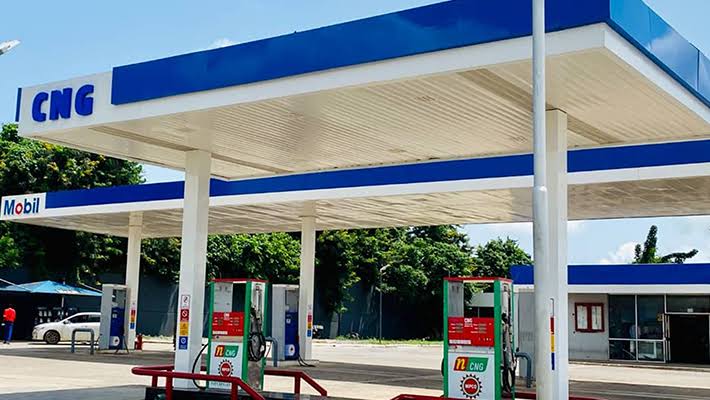
The Federal Government has moved to accelerate Nigeria’s transition to cleaner and more affordable energy with the rollout of 500 Compressed Natural Gas (CNG) refuelling stations nationwide.
This follows the conclusion of high-level discussions between the Midstream and Downstream Gas Infrastructure Fund (MDGIF) and China’s Endurance Group.
The agreement marks a major milestone in President Bola Ahmed Tinubu’s drive to reduce the country’s heavy reliance on petrol and diesel by expanding access to cheaper, cleaner CNG alternatives.
Speaking after the meeting in Abuja, the Executive Director of MDGIF, Mr. Oluwole Adama, announced that the nationwide deployment will be executed through a newly created Special Purpose Vehicle (SPV) backed by the Federal Government.
The company, known as the Compressed Natural Gas Auto Mobility Infrastructure Company (CAM InfraCo), will serve as the central coordinating platform for the project and ensure rapid development without bureaucratic delays.
Under the new partnership, CAM InfraCo will:
- Build 500 integrated CNG stations across the country
- Develop LCNG gas supply systems
- Provide CNG and LNG trucks for gas transportation to areas without pipelines
- Establish a virtual pipeline network that reaches all 36 states
For millions of Nigerians, the move promises significant relief from high transportation costs, which have risen sharply due to global petrol price fluctuations.
The administration has repeatedly positioned CNG as a more affordable and environmentally friendly fuel alternative, but limited infrastructure had slowed mass adoption—until now.
The latest agreement signals a decisive shift from fragmented, small-scale CNG initiatives to a comprehensive national rollout anchored by both government investment and private sector participation.
With MDGIF already committing over N287 billion to gas infrastructure development, the 500-station plan further consolidates CNG’s central role in Nigeria’s long-term energy transition strategy.
Energy analysts say the initiative will not only reduce emissions and improve energy security but also stimulate job creation and boost economic growth across the country.
The development stands as another clear demonstration of President Bola Tinubu’s commitment to delivering practical, citizen-focused reforms that directly impact daily living and support Nigeria’s broader economic transformation agenda.