
Claim: Electricity consumers in Nigeria are not legally responsible for buying, replacing, or repairing transformers; if a community funds one due to delays by a Distribution Company (DisCo), a formal agreement must be signed to recover their money, including via electricity tokens, under Nigerian Electricity Regulatory Commission (NERC) regulations.
Verdict: TRUE
Background
Across Nigeria, neighbourhood WhatsApp groups and Community Development Associations (CDAs) frequently organize levies to repair faulty transformers or purchase new ones when DisCos cite budget constraints or delay network extensions. Often, field staff hand out lists of cables, poles, and transformers as a condition for restoring power. A viral consumer rights advisory recently urged Nigerians to stop “financing” DisCos and cited NERC regulations as legal protection. Our Fact-Check Desk reviewed NERC’s official guidelines, the Federal Competition and Consumer Protection Commission (FCCPC) directives, and the Regulation for Investment in Electricity Networks (2015) to verify each claim.

Claim-by-Claim Verification
Claim 1: Electricity consumers are not responsible for buying, replacing, or repairing transformers; that is the DisCo’s responsibility.
- Status: TRUE
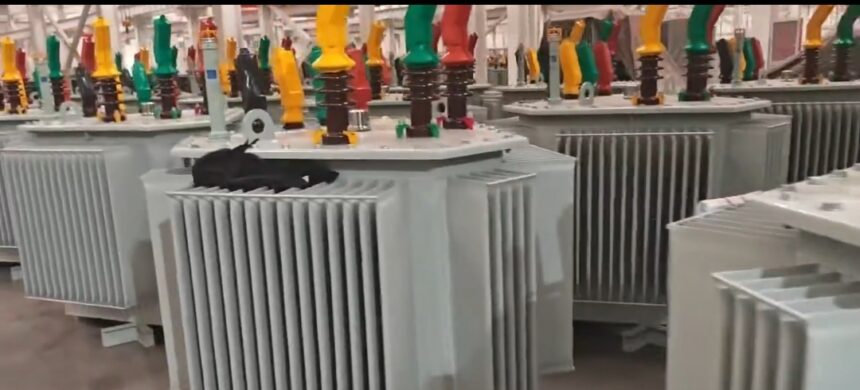
- The Facts: Both NERC and the FCCPC explicitly state that it is not the responsibility of electricity consumers or communities to purchase, replace, or repair transformers, electric poles, or feeder cables. Under NERC’s tariff structure, the capital and maintenance costs of distribution equipment are already built into the electricity tariffs customers pay. DisCos are expected to finance network assets through their Internally Generated Revenue (IGR), bank loans, or shareholders’ funds.
- The Only Exception: According to NERC, consumers are only liable for repairs if it is proven that the customer or community willfully vandalized or destroyed the asset. (Note: Customers are responsible for internal wiring, service cables, and meter boards inside their private premises, not street-level distribution infrastructure.)
Claim 2: If a community funds a transformer due to DisCo delays, there must be a formal agreement on how the community recovers its money, including through electricity tokens.
- Status: TRUE (With Strict Conditions)
- The Facts: NERC acknowledges that where a DisCo cannot immediately fund network expansion, communities may voluntarily step in to expedite connection, but only as investors, not donors. Without a written contract, any transformer purchased and energized automatically becomes the property of the DisCo, and the community forfeits its right to a refund.
- Under NERC rules, the community and the DisCo must execute a formal Project Agreement before any procurement takes place. This agreement must outline the verified cost and a clear reimbursement or amortization schedule. Because DisCos rarely issue direct cash refunds, reimbursement is typically structured as electricity energy credits (prepaid tokens) or deductions from monthly bills over an agreed timeframe until the full cost is recovered.
Claim 3: This process is covered by NERC’s regulations on investment in electricity networks.
- Status: TRUE
- The Facts: This framework is legally backed by NERC’s Regulation for Investment in Electricity Networks (2015), issued pursuant to the Electric Power Sector Reform Act. Under this regulation, once a community and a DisCo sign a Project Agreement, the DisCo is required to submit the agreement to NERC for regulatory review and approval (which NERC processes within 30 days). This prevents DisCos from claiming community-funded transformers as their own capital expenditure to justify future tariff increases.
Claim 4: You are a customer, not a financier of your DisCo.
- Status: TRUE
- The Facts: Under Nigerian consumer protection and electricity laws, the relationship between a household and a DisCo is strictly a service-for-payment contract. In fact, in April 2025, the FCCPC publicly ordered Ibadan Electricity Distribution Company (IBEDC) to refund consumers who had independently purchased transformers, poles, and cables, reiterating that communities cannot be forced to bear the capital burdens of private utility companies.
Bottom Line for Readers
If your transformer fails or your area needs connection, you are legally protected from forced levies. NERC advises consumers to report any DisCo official demanding money for transformer repairs in writing to the DisCo’s nearest office, its whistleblowing unit, or directly to NERC.
If a community chooses to self-fund a transformer to end a blackout, it must never hand over cash informally insist on a NERC-compliant Project Agreement guaranteeing full energy credit reimbursement first.