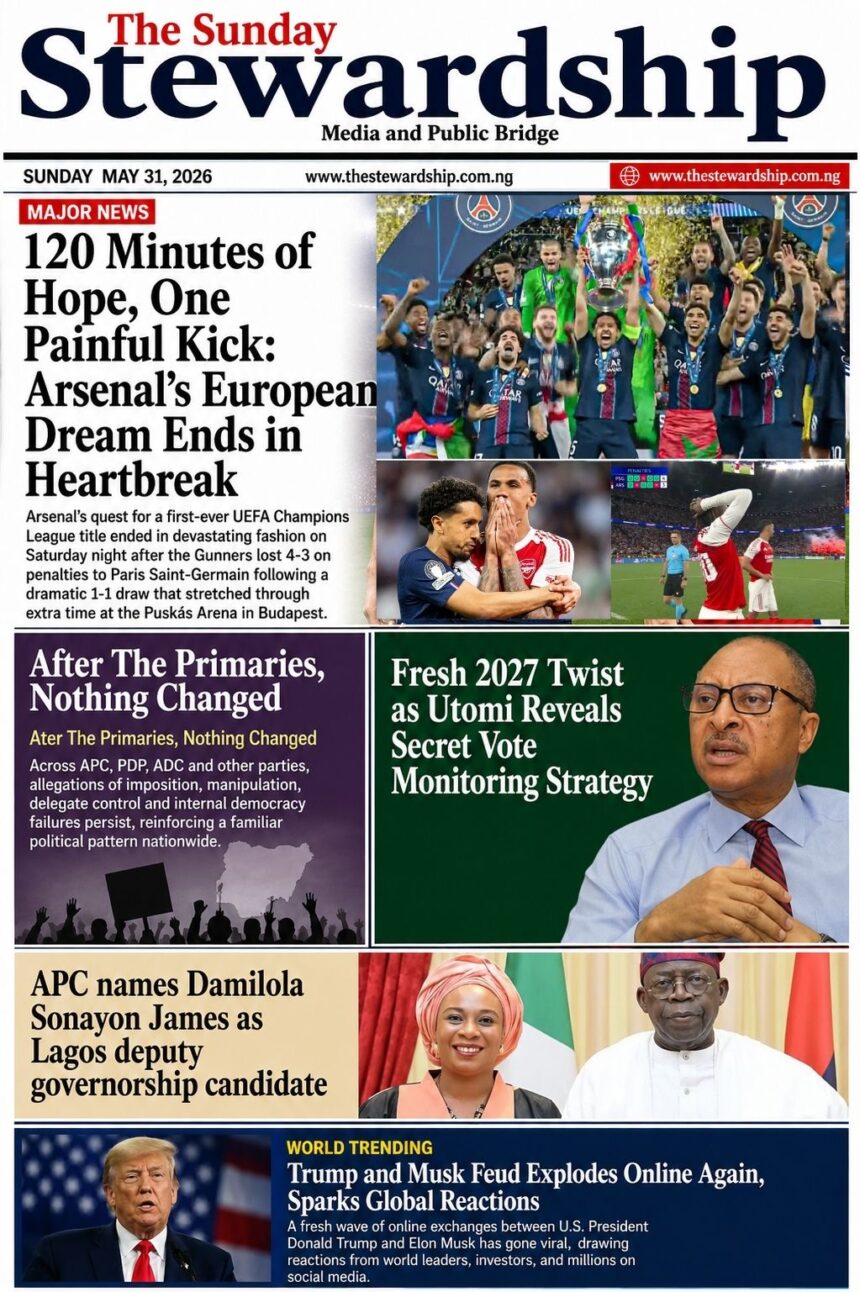
•••Across APC, PDP, ADC and other parties, allegations of imposition, manipulation, delegate control and internal democracy failures persist, reinforcing a familiar political pattern nationwide.
As the dust settles on the 2027 party primaries across Nigeria, one uncomfortable reality appears to have emerged from the political drama that played out across the country, allegations of manipulation, imposition, intimidation and disenfranchisement are no longer accusations reserved for one political party.
From the ruling APC to opposition parties such as the PDP, ADC, NDC, APM, Labour Party, Accord and AAC, the primary season has exposed deep internal cracks and renewed questions about the state of internal democracy in Nigeria.
In the African Democratic Congress (ADC), former Minister of Transportation, Rotimi Amaechi, and fellow aspirant Mohammed Hayatu-Deen openly rejected the outcome of the party’s presidential primary, alleging irregularities and manipulation with all accusing fingers pointing to Atiku Abubakar.
Their complaints echoed similar grievances heard across several parties during the primary season.
The Nigeria Democratic Congress (NDC) was not spared from controversy. While some aspirants alleged unfair treatment and manipulation of internal processes, critics have continued to question the emergence of Peter Obi as the party’s consensus presidential candidate.
According to critics, Obi appeared comfortable accepting a consensus arrangement that spared him a direct contest, a development oppositions knock him for while arguing is not prepared and inclined with democratic principles.
His supporters, however, maintain that consensus remains a legitimate and recognized method of candidate selection.
The NDC also witnessed complaints from aspirants who claimed they were denied a level playing field. Activist Aisha Yesufu publicly challenged aspects of the party’s internal processes after failing to secure a ticket, further fueling debate about transparency within the emerging political platform.
In the Peoples Democratic Party (PDP), the crisis went beyond disputes over governorship and legislative tickets. The party remained sharply divided between the faction aligned with the Minister of the Federal Capital Territory, Nyesom Wike, and the rival camp led by the party’s National Chairman, Kabiru Turaki.
The divisions were evident throughout the primary season as both camps backed different aspirants for various elective positions across the country. In several instances, parallel structures emerged, producing separate candidates for National Assembly, governorship and other offices.
The rivalry eventually extended to the presidential contest, with the two factions supporting different candidates, further exposing the PDP’s internal divisions and raising questions about the party’s ability to present a united front ahead of the 2027 general elections.
The ruling All Progressives Congress (APC) has faced its own challenges. In several states, aspirants accused governors and influential party leaders of imposing candidates and determining outcomes before delegates cast their votes.
Former Minister of Foreign Affairs, Yusuf Tuggar, reportedly accused President Bola Tinubu of imposing a governorship candidate on the people of Bauchi State.
He alleged that no primary election was conducted within the party, claiming instead that the President had already settled on Abubakar as the preferred candidate for the governorship ticket.
Tuggar described the process as undemocratic and insisted that party stakeholders were denied the opportunity to participate in a proper selection process.
In Ondo State, final declarations and official results of some National Assembly primary elections remain pending, while similar situations have been reported in a number of other states, leaving aspirants and supporters awaiting clarity from party authorities.
The African Action Congress (AAC) has also come under scrutiny. Critics argue that the party has remained heavily centered around its founder, Omoyele Sowore, who has consistently occupied the party’s most influential positions and repeatedly emerged as its presidential candidate from one election cycle to another.
While supporters see this as evidence of confidence in his leadership and commitment to the party’s ideals, critics contend that it raises questions about internal competition and concentration of influence within the party.
Elsewhere, the Accord Party experienced internal divisions in Oyo State, one of the few states where the party has maintained a significant presence. Rival factions and disagreements over leadership and candidate selection exposed further weaknesses in party cohesion.
What these developments reveal is a recurring pattern in Nigerian politics. Politicians often condemn alleged injustice when they are on the receiving end but defend similar processes when they emerge victorious.
The language may differ, but the complaints are remarkably familiar across party lines: vote buying, delegate manipulation, imposed candidates, selective enforcement of party rules and allegations of rigging.
The primaries have also demonstrated how quickly political loyalties and public perceptions can change. Political figures once celebrated as symbols of integrity suddenly become targets of criticism when they switch alliances or lose internal contests. Former rivals become allies, while former allies become villains.
For many Nigerians, the primary season has reinforced a long-standing belief that ideology remains weak in the country’s politics. Political survival, access to power and control of party structures often appear more important than principles or policy differences.
As attention shifts to the 2027 general elections, the lessons from the primaries are difficult to ignore. The events of the past weeks suggest that the struggle for credible elections cannot begin only at the ballot box. It must start within the political parties themselves.
The primaries may be over, but they have left behind a powerful message: when nearly every party is accused of the same shortcomings, the problem may be bigger than any single political platform. It may well be a reflection of Nigeria’s political culture itself.