


The legal crisis rocking the African Democratic Congress (ADC) deepened following a judgment delivered by the Federal High Court in Abuja, exposing internal vulnerabilities that threaten to disrupt the party’s readiness for the 2027 general elections.
Justice Peter Lifu ruled that the alleged resignation letter used to remove Hon. Nafiu Bala Gombe as Deputy National Chairman (North-East) was fictitious, forged, and legally invalid. Bala Gombe had maintained that the document, dated May 17, 2025, was manufactured on a fake letterhead with a forged signature to block his constitutional elevation to party leadership following the exit of former National Chairman Ralph Nwosu.
By upholding Gombe’s position, the court dismantled the legal foundation of the party’s national executive, nullifying the decisions of the 99th National Executive Committee (NEC) meeting held on July 27, 2025, which established a national leadership structure headed by former Senate President David Mark alongside former Osun State Governor Rauf Aregbesola.
This ruling has triggered a cascade of political and structural consequences, striking at the core of the opposition’s primary coalition strategy for the 2027 polls. Because the court invalidated the David Mark-led national executive, all candidate nominations and primary election processes conducted under their authority were rendered legally null and void.
Most significantly, this set aside the nomination of former Vice President Atiku Abubakar as the ADC’s 2027 presidential candidate, leaving the party’s high-stakes presidential ticket without a valid legal backing. The ruling similarly casts doubt on the legal status of legislative, governorship, and state assembly candidates nationwide who secured their nominations under the sacked executive.
The judgment has escalated tensions across the party’s warring factions. Following the verdict, Nafiu Bala Gombe asserted his authority as the recognized leader of the party, calling on high-profile figures such as Atiku Abubakar and David Mark to align with legal procedures.
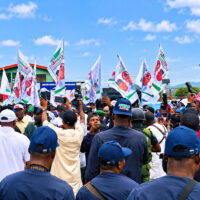
Meanwhile, the ousted leadership and affected campaign structures rejected the judgment, filing an appeal alongside an application for a stay of execution. Tensions escalated further as aggrieved party supporters and candidate representatives staged protests outside the Federal High Court in Abuja and submitted petitions to the National Judicial Council (NJC), accusing judicial officers of delaying the issuance of the Certified True Copy (CTC) of the judgment required to prosecute their appeal.
Looking ahead to the 2027 general elections, the gradual implications for the ADC and the broader opposition landscape remain severe. With statutory timelines established by the Independent National Electoral Commission (INEC) approaching, prolonged litigation risks leaving the party unable to field verified candidates on the ballot. Should appellate courts uphold Justice Lifu’s verdict, the ADC will be forced to either restart its primary nomination exercises under Gombe’s structure, a process fraught with logistical and political hurdles, or risk total exclusion from key elective positions across the country.
Furthermore, this legal gridlock threatens to stall opposition momentum, giving an operational advantage to the ruling party while the ADC remains bogged down in court battles rather than organizing on the campaign trail.




 deepened following a judgment delivered by the Federal High Court in Abuja)