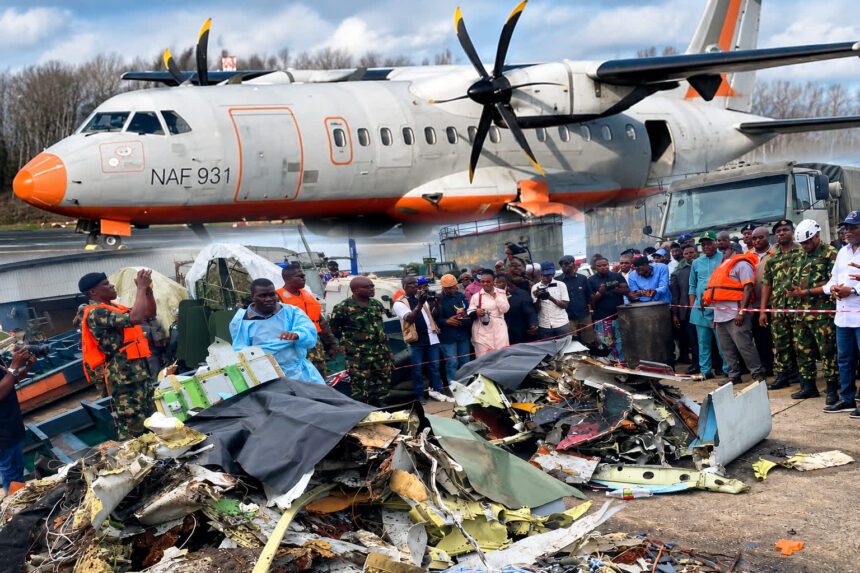
When the tragic news broke of a Nigerian Air Force ATR-42 aircraft crashing into the mangrove swamps of Igbokoda, Ondo State, an unsettling wave of familiarity swept across the nation’s military establishment. For millions of Nigerians, the sight of heavy military transport wreckage submerged in thick, waterlogged terrain immediately invoked the ghostly memory of September 26, 1992-the day the Ejigbo C-130 air disaster carved a deep wound into the heart of the country’s armed forces.
The recent tragedy in Ondo saw the Nigerian Air Force ATR-42 aircraft, carrying 25 personnel on a routine flight from Benin City to Lagos, vanish from radar screens before coming down near a naval base in the dense riverbanks of Ilaje Local Government Area. With no survivors reported, the loss represents another painful blow to the nation’s defense community, cutting short the lives of dedicated officers and specialized aircrew.
The physical similarities between the two accidents are stark. In 1992, a Lockheed C-130H Hercules tactical transport suffered catastrophic multiple engine failures shortly after taking off from Murtala Muhammed International Airport in Lagos. The massive plane plunged nose-first into the swampy, mangrove terrain of Ejigbo, where it sank heavily into deep mud. Search and rescue teams faced nightmarish logjams as the thick mire swallowed the fuselage, severely hindering immediate efforts to reach the victims. Fast-forward thirty-four years to the coastal waterways of Ondo, and emergency responders faced an almost identical geographical hurdle, forced to deploy specialized amphibious excavators, swamp buggies, and sonar equipment just to access the submerged wreckage and search for flight recorders.
Yet the most painful parallel lies not in the mud and mangroves, but in the devastating human toll. The 1992 Ejigbo disaster remains infamous for wiping out an entire tier of military leadership in a single afternoon. The ill-fated Hercules was carrying mostly middle-ranking officers, Captains, Majors, and their equivalents across the Army, Navy, and Air Force, who belonged to Course 36 at the Armed Forces Command and Staff College in Jaji. Between 158 and 163 bright minds, destined to become the future service chiefs, tactical commanders, and defense strategists of Nigeria, were lost at once. While the Ondo crash involved a smaller manifest, the operational and emotional vacuum it leaves behind echoes that same sudden loss of tactical expertise, elite training, and patriotic commitment.
As the Chief of the Air Staff orders a comprehensive investigation into the causes of the Ondo tragedy, national attention shifts toward maintenance procedures, flight safety protocols, and operational readiness. The annual memorial services held at AFCSC Jaji serve as a permanent reminder of the ultimate sacrifice made by Course 36 in the Ejigbo swamps.
Now, as the nation lays to rest the brave souls lost in the swamps of Igbokoda, the dark memory of 1992 stands as a solemn reminder that protecting those who protect the nation requires unrelenting vigilance in the skies.