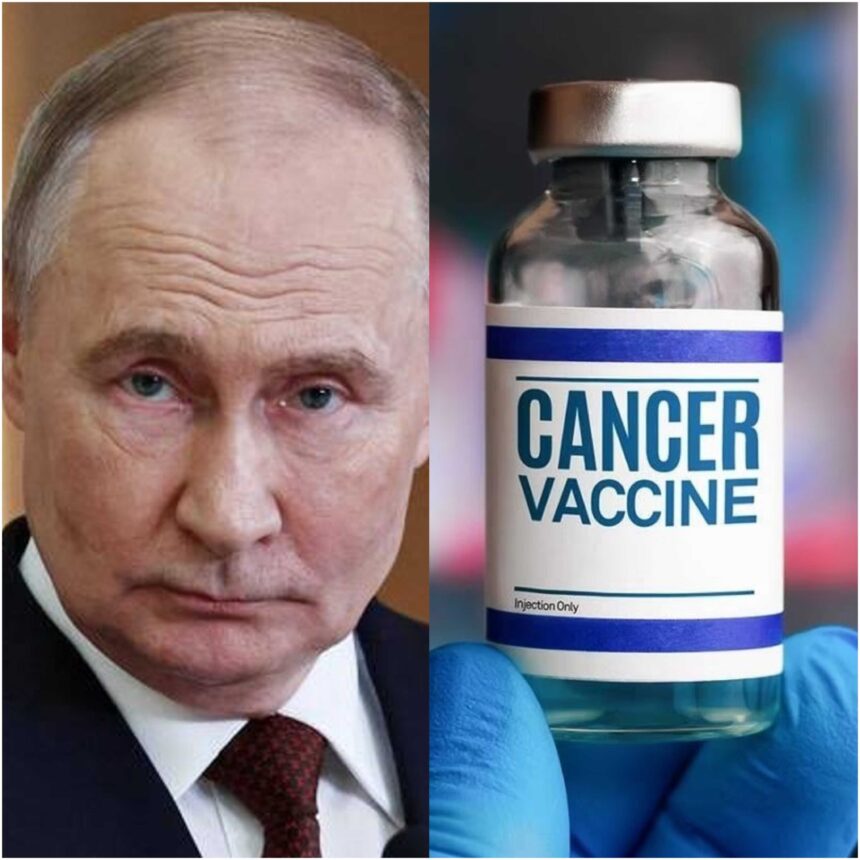
Russia has announced that it has developed an mRNA-based therapeutic cancer vaccine, which authorities say is now ready for use and will be distributed free of charge to cancer patients in the country.
According to government officials, the vaccine is designed not as a preventive measure, but as a personalized treatment for existing cancers.
Each dose is tailored to the patient’s specific tumor profile, with the help of AI-powered neural networks capable of determining the optimal vaccine composition in as little as 30 to 60 minutes.
Preclinical trials in mice have reportedly shown suppression of tumor growth and reduced chances of metastasis, raising hopes of a breakthrough in cancer therapy.
However, experts have cautioned that no human trial data or peer-reviewed studies have yet been released to support Russia’s claims. This makes the announcement difficult to independently verify beyond official government statements.
Personalized mRNA cancer vaccines are already an area of active research globally, with companies like BioNTech and Moderna advancing candidates in human clinical trials backed by regulatory oversight.
By contrast, Russia’s program has not disclosed results from any clinical testing in people, leaving questions about safety, efficacy, and international availability.
Available data indicates that the vaccine will be available only to patients in Russia, with no official channels for international enrollment or access.
Medical experts advise individuals outside Russia who are interested in such treatments to consult their oncologists about ongoing global clinical trials,which provide more transparency and scientific validation.