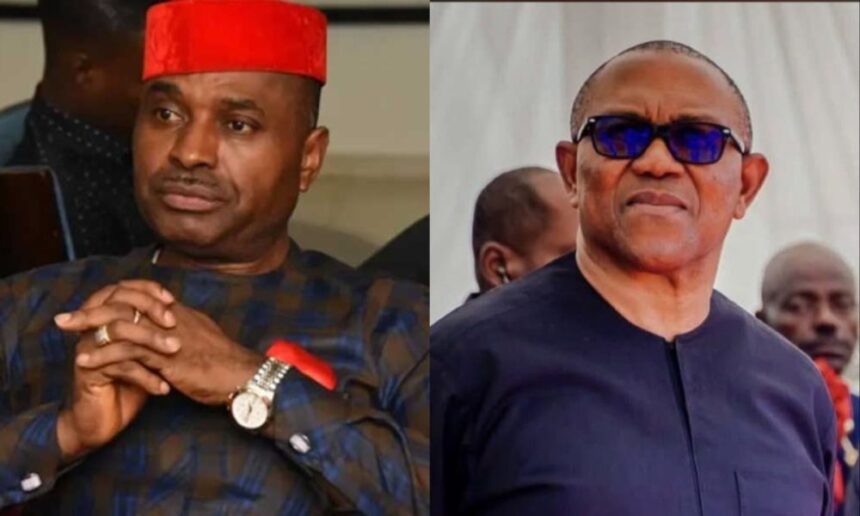
Nollywood actor turned politician Kenneth Okonkwo triggered a major stir across national television broadcasts following his blunt recantation of his previous defenses of former Labour Party presidential candidate, Peter Obi.
Speaking on a live television program, Okonkwo declared that he was misled into claiming Obi left zero debt in Anambra State, labeling his former principal with sharp criticism while insisting he can no longer defend claims he supported during the 2023 general elections after reviewing more financial records and disclosures.
The outburst marks the latest chapter in a tumultuous political fallout between both figures. Okonkwo previously served as one of the primary spokespersons for Obi’s 2023 presidential campaign council, fiercely defending Obi’s public record on television and social media platforms. The relationship soured shortly after the election amid internal leadership battles within the Labour Party, with Okonkwo publicly accusing Obi of betrayal, indecisiveness, and failing to manage party affairs effectively.
Okonkwo eventually abandoned the Labour Party and joined the African Democratic Congress (ADC) platform, where he was formally appointed as a campaign spokesperson for former Vice President Atiku Abubakar ahead of the 2027 presidential election.
The ongoing battle between Obi and Okonkwo escalated beyond media exchanges into the legal arena, with Obi filing a multi-billion-naira defamation lawsuit against Okonkwo. Obi demanded a public apology, retraction, and substantial monetary damages over the television comments and subsequent accusations regarding his governance record.
Obi’s legal team characterized the statements as malicious, designed to destroy his public reputation and misinform the electorate. Okonkwo, however, rejected the demands through his own legal representatives, maintaining that his statements were based on public records and stating he would not be intimidated or silenced from challenging his former principal.
This legal clash follows a similar high-profile lawsuit filed by Obi against human rights activist and lawyer Deji Adeyanju. Obi instituted a multi-billion-naira defamation suit against Adeyanju after the activist publicly accused Obi of trying to buy his support during meetings and labeled him with derogatory characterizations. Adeyanju publicly dismissed the legal action, claiming the former governor was attempting to hide behind lawsuits to silence critics, and reiterated his willingness to confront Obi in court to substantiate his allegations.
These court battles unfold as a growing wave of former associates, commentators, and political insiders push back against Obi’s long-standing public image. Critics and former allies have increasingly stepped forward with accusations alleging that his administration was far less clean than claimed, pointing to underlying issues with transparency, accountability, financial governance, and the manipulation of religious and ethnic narratives.
Detractors contend that Obi’s reliance on frugality and public simplicity is a carefully cultivated image aimed at securing sympathy, arguing that emerging financial records, liabilities, and firsthand testimonies from former campaign aides reveal a disconnect between his public posturing and his actual political and administrative record.
As the political landscape shifts toward the 2027 election cycle, scrutiny surrounding Peter Obi’s character, political consistency, and governance record has intensified sharply. Opponents across the political divide, including former allies like Okonkwo, have taken aim at Obi’s core campaign pitch of integrity and frugal administration. Critics have increasingly challenged his financial stewardship in Anambra State, pointing to unresolved liabilities, state debts, and institutional management as evidence that his platform exaggerates his achievements.
The heat on Obi extends beyond his state tenure to questions regarding his capacity to hold together an opposition coalition. Opponents argue that his reluctance to compromise during key party disputes reflects a lack of political tact, while rival campaign groups contend that his campaign relies heavily on emotional rhetoric rather than practical governance metrics.
With major political figures re-aligning and sharpening their attacks on national television and in courtrooms, Obi’s accountability, past administrative figures, and personal credibility continue to face intense scrutiny, serving as central targets for rival strategists aiming to erode his political base before 2027.