••• Industrial giant promises round-the-clock electricity supply, raising hopes for an end to Nigeria’s chronic power crisis
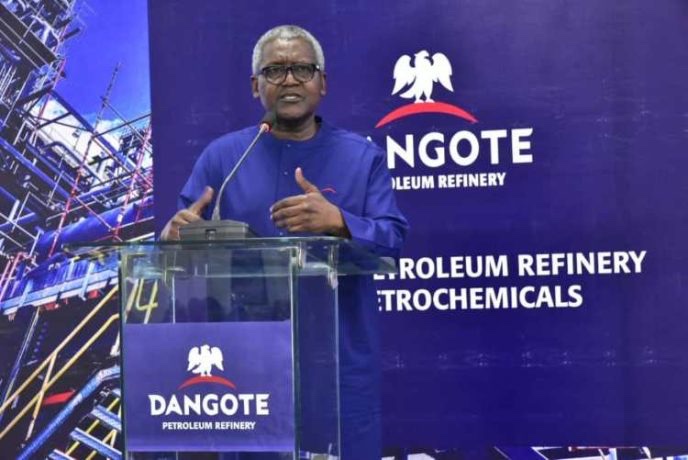
Africa’s richest businessman, Aliko Dangote, has unveiled plans for a massive electricity generation project expected to commence operations in the third quarter of 2026, a move that could significantly transform Nigeria’s struggling power sector.
The proposed project, which is projected to generate up to 20,000 megawatts (MW) of electricity, is being described as one of the most ambitious private-sector power investments in the nation’s history.
Dangote disclosed that the initiative forms part of the Dangote Group’s broader expansion strategy beyond cement, fertiliser, petrochemicals, and oil refining.
According to reports, the project is designed to support industrial growth, boost economic productivity, and provide more stable electricity supply across the country.
If achieved, the planned output would surpass Nigeria’s current average electricity generation, which has remained far below national demand for decades.
The announcement has generated widespread interest among industry stakeholders, many of whom see it as a potential game changer for manufacturers and businesses burdened by high energy costs and dependence on diesel generators.
Energy analysts noted that reliable electricity remains one of the biggest obstacles to Nigeria’s economic development, with millions of households and businesses facing frequent power outages.
They argue that large-scale private investments could help bridge the country’s power deficit while complementing government efforts to improve generation and distribution infrastructure.
The Dangote Group already operates captive power facilities across several of its industrial plants and has previously supplied excess power to surrounding communities.
The new initiative is expected to leverage the conglomerate’s experience in large-scale infrastructure development and energy management.
Should the project meet its projected timeline, Nigerians could begin to see significant improvements in electricity availability from late 2026, offering renewed hope for businesses, industries, and households long affected by unreliable power supply.