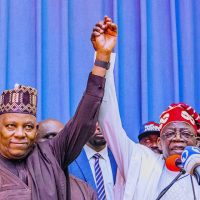

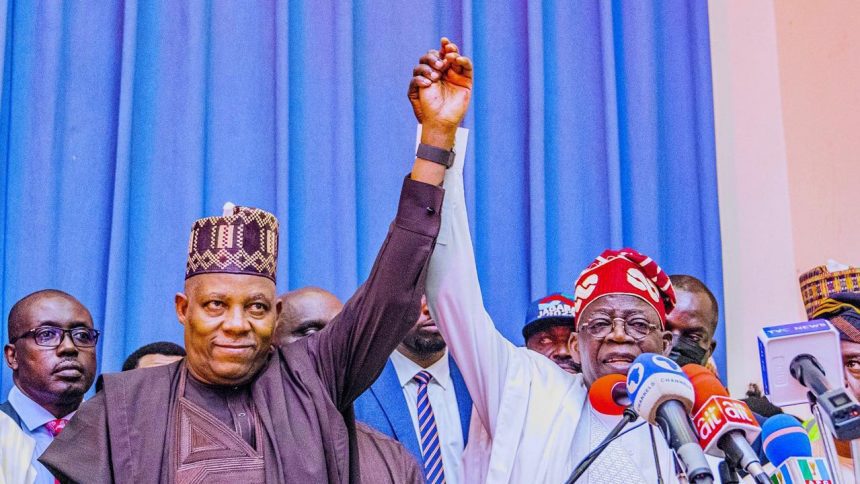
The ruling All Progressives Congress (APC) has officially released its campaign rally timetable for the upcoming presidential election, scheduling events across all 36 states and the Federal Capital Territory (FCT). The itinerary kicks off with an official flag-off in Kaduna State on October 24, 2026, and will run through January 9, 2027, concluding with a major closing rally in Lagos State.
However, the schedule reveals that President Bola Ahmed Tinubu will only physically attend campaign rallies in 12 selected states, delegating the physical campaign duties for the remaining 24 states and the FCT entirely to the APC Presidential Campaign Council and local party leadership.
Under the newly released timetable, President Tinubu will personally appear at campaign rallies in Kaduna, Rivers, Plateau, Oyo, Borno, Enugu, Sokoto, Delta, Kano, Bauchi, Adamawa, and Lagos. Conversely, his physical absence will be noted in key states across every geopolitical zone, including Gombe, Nasarawa, Ekiti, Ebonyi, Jigawa, Ondo, Edo, Yobe, Kebbi, Akwa Ibom, Anambra, Cross River, Benue, Katsina, Ogun, Abia, Kogi, Osun, Kwara, Zamfara, Bayelsa, Niger, Taraba, Imo, and the Federal Capital Territory, Abuja. In these locations, campaign operations will be spearheaded by designated party delegates, governors, and regional surrogates while the President remains focused on official duties in the federal capital.
This campaign strategy represents a distinct shift from President Tinubu’s previous electoral approach. Prior to the 2023 general election, Tinubu built his momentum by maintaining a grueling schedule as the only major presidential candidate to physically visit and campaign in all 36 states of the federation.
While altering campaign schedules is not completely unprecedented in Nigerian presidential history, as past incumbents like former President Muhammadu Buhari also scaled back multi-state tours to balance governance duties, Tinubu’s personal 2023 benchmark has made his current travel reduction a point of intense political discussion.
Although the exact strategic rationale behind restricting his campaign travel has not been formally elaborated beyond balancing administration tasks with electoral demands, opposition parties have seized on his absence from 25 states and the FCT.
Political critics and rival candidate camps contend that the reduced schedule suggests potential health and endurance constraints, alleging that the President may not possess the physical fitness required for an exhausting 36-state tour and questioning his capacity to serve a second term in office.
In response, the APC leadership and government spokespersons have strongly dismissed these criticisms, maintaining that the President’s governance responsibilities take precedence and that the party’s widespread organizational strength ensures a robust campaign presence across every state regardless of his physical attendance.