Inside the cavernous General Assembly hall, the traditional diplomatic rhetoric of “hope and consensus” has been replaced by a grim, shared diagnosis: the international system forged in the ashes of Berlin in 1945 is fracturing under the weight of unmitigated global conflict. Eight decades after the total collapse of the old European order compelled world leaders to construct a post-war framework designed around the promise of “never again,” the United Nations finds itself facing its own institutional reckoning. With major geopolitical powers locked in zero-sum brinkmanship, international institutions sidelined, and conflict escalating across multiple continents, diplomatic observers warn that the global architecture is unraveling much like the geopolitical structures of 1989, drifting dangerously close to an uncontainable global clash.
The dynamics playing out at the United Nations General Assembly today, paralysis, unilateral brinkmanship, walkouts, and the systematic weakening of collective security, mirror several structural conditions that defined both the pre-Berlin period of the 1930s League of Nations collapse and the post-Berlin era of Cold War proxy gridlock. Before the post-1945 order was born in Berlin and San Francisco, the world relied on the League of Nations, whose structural collapse offers direct historical parallels to today’s diplomatic friction points. In the 1930s, the League failed to stop major state aggression in East Asia and Africa, just as today’s UN Security Council is fundamentally paralyzed because permanent members hold veto power, rendering the body incapable of halting conflicts involving major powers or their direct proxies. Furthermore, just as Nazi Germany and Imperial Japan famously walked out of the League of Nations in 1933 to signal their total rejection of its authority, today’s coordinated walkouts reflect a similar rejection of international forums as spaces for genuine dialogue, converting the podium into a stage for grandstanding rather than negotiation. The early 1930s also saw the breakdown of the Geneva Disarmament Conference, leading nations to race toward rearmament, a shift mirrored today as critical arms control treaties fray and yield to open military escalation and nuclear deterrence.
The backdrop to this year’s UN General Assembly is defined not by peace talks, but by expanding conflict zones and the steady erosion of international humanitarian law. UN Secretary-General António Guterres set a sobering tone, warning gathered leaders that “the fault lines in our world are widening,” emphasizing that core principles of national sovereignty, civilian protection, and diplomatic resolution are being systematically cast aside. Joining the critique of multilateral paralysis, President of the General Assembly Khalilur Rahman stated directly from the rostrum, “Outside these walls, people are no longer asking whether the United Nations still exists, they are asking whether it actually works.” The declaration echoed the twilight days of divided Berlin, when institutions that once seemed permanent suddenly lost their moral and operational authority.
Following the fall of Berlin in 1945, the post-war framework was constructed around a bipolar power dynamic that produced many of the systemic flaws the UN struggles with today. During the Cold War, the UN Security Council was frequently deadlocked because the United States and the Soviet Union routinely vetoed any resolution threatening their interests, creating the exact gridlock seen in contemporary global crises. Just as the post-1945 era saw superpowers unilaterally intervene in sovereign nations while ignoring international condemnation, current critics from the Global South point to a double standard where international law is enforced strictly on smaller states but brushed aside by major military powers. This legacy extends directly to foreign policy doctrines; mid-20th-century shifts toward rigid unilateral doctrines find their modern counterpart in contemporary speeches that explicitly reject global governance and international courts in favor of raw state power.
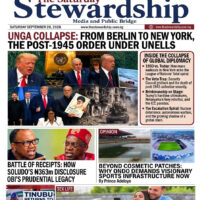
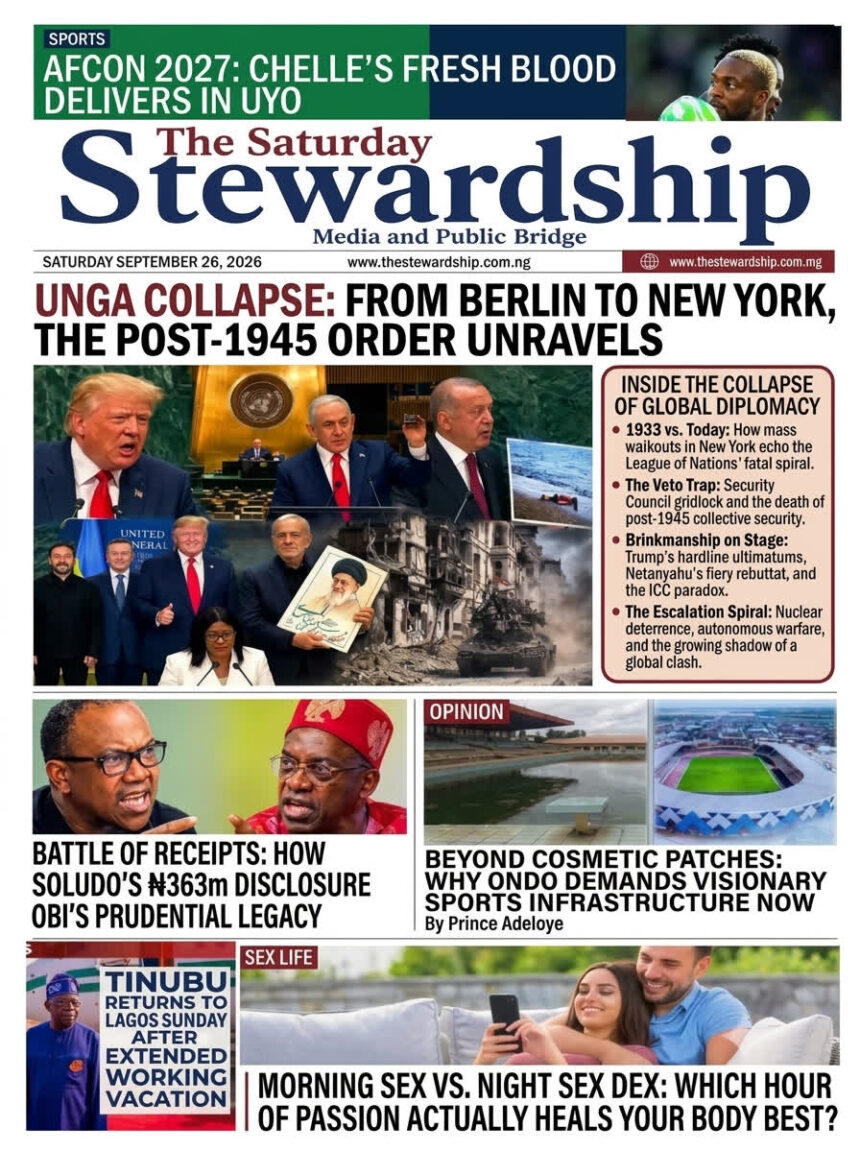
Instead of fostering bridge-building, the iconic green-marbled podium turned into an arena of high-stakes political intrigue, personal attacks, and fiery counter-punches. Taking the stage with his signature unilateral doctrine, U.S. President Donald Trump completely rejected global governance, declaring, “There is no global government, and while I am President, there will be no global taxes.” Boasting that under his administration America is “stronger today than ever before,” Trump bypassed traditional diplomacy to deliver harsh ultimatums, proclaiming, “While others have spoken of peace, I have made peace. While others have ignored threats, I have confronted them.” He warned foreign adversaries that the U.S. would unleash “unmatched military might” to defend its interests, directly threatening Iran with swift destruction if it pressed forward with nuclear ambitions: “Or do I annihilate the Islamic republic and do it quickly, never giving them a chance to kill and destroy people and countries again?” His combative remarks prompted a swift walkout by the Cuban delegation as he labeled their regime a “failed state”, and he took aim at the UN’s own human rights body, dismissing its officials as “craven hypocrites” for criticizing American border enforcement policies.
Adding to the legal and geopolitical crosscurrents engulfing the assembly hall was the unprecedented shadow cast by the International Criminal Court. Addressing the broader international crisis, Chief Prosecutor Karim Khan reaffirmed that the rule of law must apply universally, stating, “If we do not demonstrate our willingness to apply the law equally, if it is seen as applied selectively, we will be loosening the remaining bonds that hold us together.” The sheer irony of an assembly taking place in host territory exempt from the Rome Statute was highlighted by the presence of key figures facing outstanding warrants, exposing the deepest paradox of contemporary international law: enforceable mechanisms exist on paper, yet lack an army or host-nation consensus to execute them.
Palestinian President Mahmoud Abbas used his address to directly accuse the international community of complicity in regional suffering, demanding, “How long will some countries continue to remain silent about Israel, or continue supplying it with weapons that it uses against our people? What, then, is the international community waiting for before it acts?” Meanwhile, cross-continental rivalries flared as leaders exchanged sharp barbs over sovereignty, arms shipments, and historical dominance, laying bare a platform increasingly used to broadcast hostility rather than forge compromises.
The tensions culminated in a dramatic, coordinated mass walkout when Israeli Prime Minister Benjamin Netanyahu took the stage. Responding to an explicit call by the Palestinian Mission to empty the hall, diplomats from dozens of nations stood up and exited in droves, leaving sweeping rows of seats vacant as Assembly President Rahman repeatedly pleaded, “Order in the hall, please”. The walkout included delegations from across the Middle East and North Africa such as Saudi Arabia, Iran, Jordan, Libya, Algeria, Tunisia, Egypt, Lebanon, Syria, and Sudan. They were joined by Asia-Pacific and European representatives from Malaysia, Bangladesh, Sri Lanka, Turkey, Uzbekistan, Kyrgyzstan, and Montenegro, as well as delegates from Cuba, Mauritius, the Marshall Islands, alongside dozens of other non-aligned and Global South nations who joined the protest.
In a chilling silent counter-protest, the Iranian delegation walked out leaving behind a framed photo of slain Quds Force commander Qassem Soleimani propped on their desk. Undeterred by the sea of empty chairs, Netanyahu launched an aggressive rebuttal from the podium, directly addressing those who fled: “If there are any other moral cowards who haven’t yet left this hall, please do so now.” Directly blasting the International Criminal Court for targeting democratically elected leaders, he characterized the court’s actions as a “moral outrage of historic proportions” and an attempt to “deny Israel the basic right of self-defense.” Dismissing allegations of war crimes as “the biggest lie of the century,” he hit back at European critics, exclaiming, “Britain and France accuse Israel of ‘colonialism’! For God’s sake, they invented the term. Give us a break.”
Just as the fall of Berlin in 1945 signaled the violent end of an era and the birth of a new balance of power, today’s diplomatic breakdown reveals an international apparatus unable to contain the forces it was designed to govern. Ultimately, the core continuity linking pre-Berlin history, the post-Berlin order, and the present day is the widening gap between institutional design and geopolitical reality. When international organizations lose their ability to enforce rules on powerful states, they transition from functioning arbitrators into theatrical arenas where nations broadcast grievances, stage walkouts, and issue ultimatums before returning to unilateral action.
Without enforceable norms or functioning mediation mechanisms, the risk of localized conflicts cascading into a wider, direct confrontation between major nuclear-armed powers is at its highest in the post-Cold War era. Military doctrines are leaning heavier on deterrence and preemption rather than negotiated arms control, while rapid advancements in autonomous warfare and artificial intelligence introduce unprecedented unpredictability to the modern battlefield.
As world leaders conclude their addresses, the core debate centers on whether the multilateral framework can be retooled to reflect today’s multipolar reality, or if the global security architecture will completely give way to unconstrained regional power struggles. Calls for structural reform, including expanding the Security Council to include underrepresented regions like Africa and Latin America, and restricting the use of the veto, have gained urgency. However, without a collective commitment from the world’s most powerful nations to submit to shared rules, diplomats quietly acknowledge that the crumbling of the post-1945 Berlin consensus is no longer a historical warning, but an impending reality.