Details emerging from the 616-page final arbitral award issued by the International Chamber of Commerce (ICC) tribunal in Paris have exposed a web of financial transfers, promised cuts, and administrative overreach involving top Nigerian public officials in the multi-billion-dollar Mambilla hydropower project saga.
The arbitral award completely dismissed the $2.35 billion compensation claim filed by Sunrise Power and Transmission Company Limited against the Federal Government of Nigeria, ruling that the company’s original 2003 Build-Operate-Transfer contract and subsequent settlement agreements were procured and sustained through systematic bribery, corruption, and lack of statutory authorization.
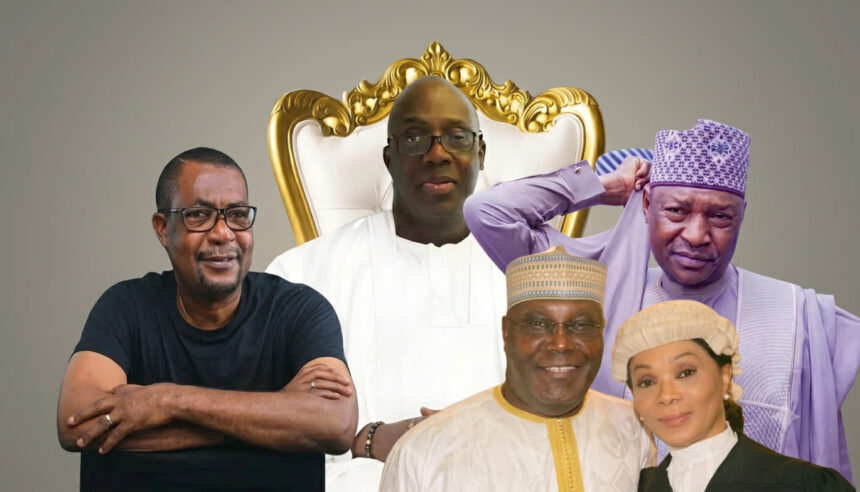
According to the findings published by TheCable, the money trail heavily indicts former Minister of Power and Steel, Dr. Olu Agunloye, who issued the $6 billion award letter to Sunrise Power on May 22, 2003, without the mandatory authorization of the Federal Executive Council or former President Olusegun Obasanjo. The tribunal documented payments made directly and indirectly to Agunloye by Sunrise founder, Leno Adesanya, including funds disguised as cover for medical expenses and personal costs. Obasanjo testified under oath during the proceedings that he never cleared the contract and had explicitly instructed Agunloye to step down the memo.
The ICC award also brought former Vice-President Atiku Abubakar into the spotlight after Adesanya admitted to transferring $500,000 on January 30, 2003, through an offshore entity, China Castle Investments Limited, into a United States Citibank account belonging to his former wife, Jennifer Douglas. While Adesanya claimed the payment was a routine foreign exchange transaction, the tribunal rejected the explanation due to a total lack of supporting evidence, noting the suspicious chronological proximity between the transfer and the subsequent unauthorized contract award. Similarly, the money trail established payments totaling $1.74 million routed through intermediaries and corporate entities linked to Abba Dasuki, the son of former National Security Adviser Sambo Dasuki, to secure political leverage and civil service influence.
Former Attorney-General of the Federation, Abubakar Malami (SAN), faces severe scrutiny in the ruling over his sudden shift in stance regarding Sunrise Power. Despite initially labeling Adesanya a criminal actor in 2018, Malami aggressively pushed for a $200 million out-of-court settlement in 2020, later executing an addendum that introduced a $200 million default penalty and a 10 percent daily-compounded interest rate, exposing the Nigerian treasury to a potential $400 million liability. The tribunal observed that Malami acted contrary to Nigeria’s sovereign defense and effectively operated on behalf of Sunrise, driven by promises of cuts and secondary incentives. Former President Muhammadu Buhari provided official evidence confirming he repeatedly refused to execute Malami’s settlement arrangement, maintaining that Sunrise performed no physical work on the Mambilla site.
The arbitral panel also detailed transactions involving senior civil servants who overseen the negotiation of the General Project Execution Agreement in 2012. Former Permanent Secretary in the Ministry of Power, Dr. Dere Awosika, was named after financial records showed offshore transfers totaling $135,000 from Adesanya’s entity, Lutin Investments, into a startup company owned by her son, Tola Awosika. Additionally, former Solicitor-General of the Federation, Abdullahi Yola, was revealed to have received $50,000 from the same offshore vehicle in November 2015. The tribunal emphasized that these financial payouts exceeded official public salaries and were part of a decades-long campaign by Sunrise to preserve unlawful claims against Nigeria.
As a consequence of the findings, the three-member ICC panel chaired by Melaine van Leeuwen ordered Sunrise Power and Leno Adesanya personally to reimburse Nigeria $11.82 million in legal defense costs, along with bearing 75 percent of the arbitration administrative fees. The ruling brings an end to nine years of international legal battles, clearing Nigeria of liability while directing law enforcement attention toward the public figures named across the financial trail.