A fresh rift has opened between Aso Rock and top Christian clergy following a sharp public exchange triggered by a high-level private meeting at the Presidential Villa in Abuja.
The latest confrontation erupted after His Eminence, John Cardinal Onaiyekan, granted a televised interview offering his personal account and interpretation of a closed-door meeting between the Catholic Bishops’ Conference of Nigeria (CBCN) and President Bola Ahmed Tinubu.
Presidential media aide Temitope Ajayi swiftly criticized the prelate’s post-meeting remarks, labeling them an “abuse of clerical privilege” and maintaining that confidential engagements with the Commander-in-Chief demand institutional discretion and professional reciprocity.
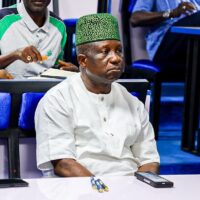
Joining the administration in pushing back against the Catholic hierarchy, Hon. Monday Alade, an All Progressives Congress (APC) chieftain and U.S.-based security expert, strongly condemned Cardinal Onaiyekan’s decision to go public, calling it a breach of trust that undermines national stability.
”Cardinal Onaiyekan’s actions represent a clear breach of statecraft protocol and an abuse of clerical privilege,” Alade stated. “When national leaders and religious figures meet behind closed doors with the Commander-in-Chief, there is an implicit requirement of confidentiality.
Running to television studios immediately after to air a selective narrative damages the integrity of high-level dialogue and signals a partisan agenda rather than genuine moral concern.”
Alade argued that the Church leadership’s stance is deeply colored by residual electoral bitterness from the 2023 general elections, specifically regarding the APC’s same-faith presidential ticket and the realignment of Christian voters behind Labour Party candidate Peter Obi.
”It is increasingly clear that key figures within the Church hierarchy have failed to move past the 2023 elections,” Alade said. “Instead of acting as neutral moral guides, some prelates are behaving like opposition proxies by proxy.
They consistently downplay major administrative achievements, such as macroeconomic stabilization efforts, regularized state-level wage disbursements, and key social interventions like the National Student Loan Scheme (NELFUND).”
From an executive and national security perspective, Alade stressed that governing a nation of over 200 million people requires balancing complex operational trade-offs based on daily, high-level intelligence reports, insights that cannot be reduced to media soundbites or sound-bite critiques.
”Governing Nigeria requires rigorous statecraft, not media theatrics,” Alade emphasized.
“Aso Rock relies on comprehensive intelligence reports that present a far more complete picture than what is seen in public headlines. The administration’s defense of its policies is not aloofness; it is a necessary protection of institutional stability against partisan narratives.”
As political actors begin assessing the landscape leading toward the 2027 election cycle, Alade warned that religious leaders must decide whether they want to be constructive partners in national security or active political adversaries.
”If the Church wishes to remain a respected moral authority in Nigeria’s public square, its leadership must respect state protocol, engage in confidential diplomacy, and recognize the real progress being made under President Tinubu’s administration,” Alade concluded.
“Using the pulpit to conduct partisan warfare only destabilizes the country and erodes public trust in both the State and the Church.”