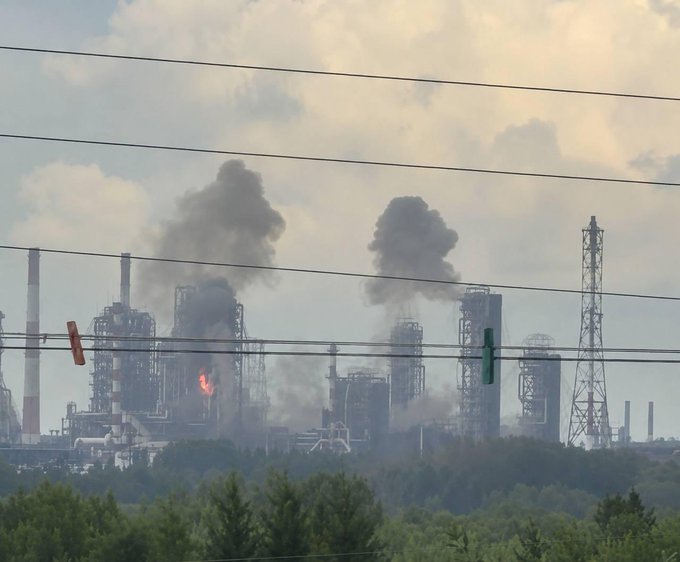
Ukraine has launched its deepest drone strike since the start of the war, hitting Russia’s largest oil refinery in the Siberian city of Omsk, more than 2,500 kilometres from the Ukrainian border.
The overnight operation targeted the Gazprom Neft-operated Omsk refinery, a strategic energy facility that processes about 22–23 million metric tonnes of crude oil annually and supplies a significant share of Russia’s petrol, diesel and aviation fuel.
Ukraine’s General Staff confirmed that the attack struck a key primary crude processing unit at the refinery, triggering a major fire.
Military officials said the extent of the damage is still being assessed but described the operation as another major blow to Russia’s energy infrastructure.
Russian authorities acknowledged that several drones penetrated air defences and reached the refinery. Omsk regional Governor Vitaly Khotsenko confirmed that emergency services were deployed to contain the fire, adding that no casualties were reported.
The strike is being regarded as Ukraine’s longest-range attack of the war, with reports indicating the drones travelled between 2,500 and 3,000 kilometres to reach the target.
Defence analysts believe the operation demonstrates Kyiv’s rapidly expanding long-range strike capability and its ability to reach strategic military and industrial facilities deep inside Russian territory.
The Omsk refinery had been one of the few major Russian refining facilities that had largely escaped Ukraine’s sustained drone campaign against oil infrastructure.
With the latest attack, Ukrainian officials say all of Russia’s largest gasoline-producing refineries have now been targeted since the war began.
The operation formed part of a wider overnight offensive in which Ukrainian forces also reported strikes on additional oil refineries, fuel terminals, military facilities and logistics infrastructure across several Russian regions and occupied territories.
Ukraine says its strategy is aimed at degrading Russia’s ability to sustain military operations by disrupting fuel production, transportation and supply chains.
The campaign has intensified in recent months as Kyiv increasingly relies on domestically produced long-range drones to strike high-value targets far beyond the battlefield.
The latest attack comes amid mounting pressure on Russia’s fuel sector, with repeated strikes on refineries contributing to production disruptions and supply challenges.
Analysts say continued attacks on strategic energy facilities could further strain Russia’s military logistics and economy as the conflict enters another critical phase.