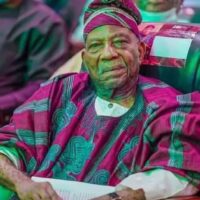
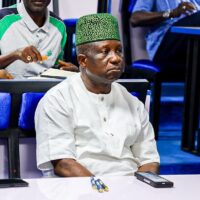
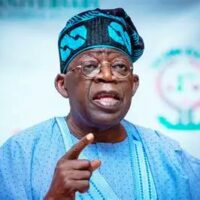
Nigeria’s democracy faces a troubling pattern: the steady recycling of political office holders who leave behind mixed or poor records in executive office, only to seek refuge in the National Assembly.
The Senate, in particular, increasingly appears to serve as a retirement destination for former governors, rather than a chamber renewed by fresh thinking and broad representation.
Across the country, no fewer than 22 current and former governors are already positioning for senatorial seats in 2027.
The list includes AbdulRahman AbdulRazaq, Hope Uzodinma, Mai Mala Buni, Dapo Abiodun, Abdullahi Sule, Ahmadu Fintiri, Aliyu Wamakko, Danjuma Goje, Bala Mohammed, Ibikunle Amosun, Yahaya Bello, Ifeanyi Okowa, Gbenga Daniel, Gabriel Suswam, Ibrahim Dankwambo, Orji Uzor Kalu, Aminu Tambuwal, Samuel Ortom, Adamu Aliero, Abdul’aziz Yari, Simon Lalong and Jolly Nyame, among others.
The trend raises a larger national question: if political leadership remains concentrated in the hands of the same generation of office holders, where is the practical space for younger Nigerians repeatedly described as “leaders of tomorrow”?
The issue goes beyond age alone. It is about whether public office is becoming a closed cycle. A governor completes eight years in office, often leaving unresolved problems in healthcare, education, roads, jobs, and industrial growth, then proceeds to the Senate with the same political structure.
In many cases, this limits competition and crowds out younger aspirants with new ideas but less access to party machinery.
Nigeria’s development cannot accelerate if leadership is trapped in repetition. Nations that grow rapidly tend to open decision making to people with new skills in technology, innovation, industrial planning, and modern economic management.
Nigeria’s youth population is one of its greatest assets, yet young professionals remain largely excluded from the highest levels of policy making.
The consequence is visible: unemployment remains high, industries underperform, and governance often moves at the pace of political survival rather than transformation. National progress slows when institutions become dominated by career politicians whose main strength is longevity rather than measurable results.
Even among the few former governors often considered active in the Senate, such as Adams Oshiomhole, Orji Uzor Kalu, Danjuma Goje, Gbenga Daniel, and Aminu Tambuwal, who have maintained some visibility in legislative debates and national policy discussions, questions still persist about whether their full capacity has translated into measurable impact for their constituencies and the nation.
Public visibility in plenary or media engagement does not always equate to effective representation, as many citizens continue to question the extent of their legislative influence, constituency development, and the tangible outcomes of their presence in the Red Chamber.
This reinforces concerns that occupying a Senate seat should be judged not by political profile alone, but by clear legislative performance and direct value to the people represented.
The Senate should not be a guaranteed next step after governorship. It should be earned through ideas, legislative capacity, and public trust. Nigeria needs leaders who understand digital economies, startup ecosystems, renewable energy, agribusiness, and industrial modernization.
A country where yesterday’s governors dominate tomorrow’s legislature risks standing still while the world moves ahead. If the same political actors continue to rotate power among themselves, the promise to the youth becomes difficult to sustain.
The real question for 2027 is no longer who gets elected, but whether Nigeria is prepared to make room for a generation capable of taking it forward.