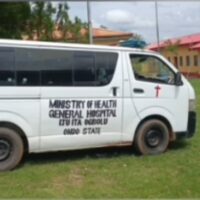

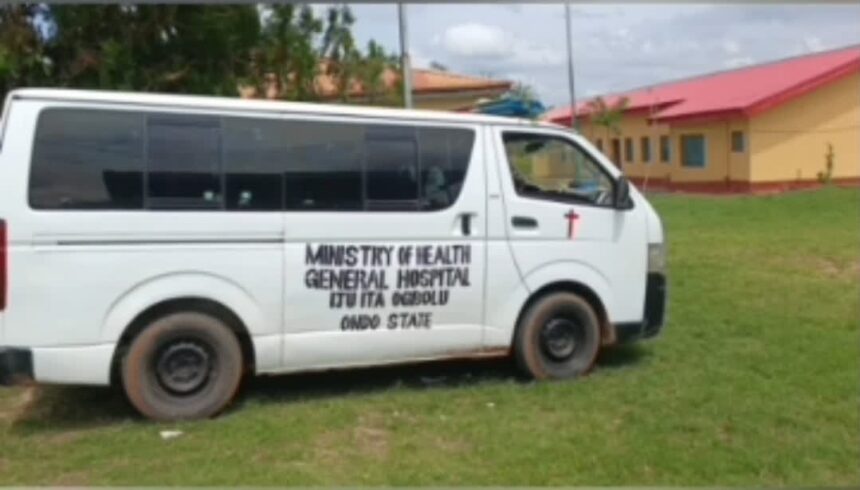
Despite a ₦59.5 billion health sector allocation in Ondo State’s 2026 budget and rising revenues from federal allocations, primary and secondary public health institutions across the state are increasingly relying on public crowd-funding and local interventions to sustain basic diagnostic and clinical operations.A recent public solicitation from General Hospital Iju/Itaogbolu, serving communities across the Akure North Local Government Area, has brought the stark reality of public healthcare funding under the Governor Lucky Aiyedatiwa administration into sharp focus.
Although the facility recently managed to restore round-the-clock 24-hour service delivery, the administration at the hospital confirmed that crucial diagnostic machinery remains completely lacking. In a direct appeal circulated to community stakeholders, the hospital listed an urgent need for a functional modern X-ray machine and a new ultrasound scanning machine.
To bridge the operational gap, the facility published an official Wema Bank account while directing public inquiries to the Hospital Medical Director, Dr. Odidiomo Ajibola.
The restoration of basic 24-hour operations at the General Hospital was largely spearheaded by local administrative intervention rather than direct state-level funding.
Finding reveals that, to address the deteriorating state of the facility and restore vital healthcare delivery to residents of Akure North, the Executive Chairman of Akure North Local Government Area, Hon. Johnson Ogunbolude, prioritized key rehabilitation projects. Under his administration’s health initiatives, physical structures were renovated and key operational support was deployed to bring the dying hospital back to life.
However, local government resources remain limited. While physical infrastructure has received local relief, advanced clinical equipment, a responsibility falling squarely under the domain of the Ondo State Ministry of Health and the Hospitals Management Board (HMB), remains absent.
The reliance on public donations for essential diagnostic tools raises fundamental questions regarding budget execution, supervision, and resource allocation by both the State Ministry of Health and the Ondo State Hospitals Management Board, the agency directly charged with managing state-owned secondary healthcare facilities. Under Governor Lucky Aiyedatiwa’s 2026 “Budget of Economic Consolidation,” the state allocated 11.4% of its overall expenditure to the health sector, a substantial sum aimed at upgrading health facilities, procuring medical equipment, and strengthening rural health systems. Furthermore, statutory federal allocations to Ondo State have experienced a notable upward trajectory over the past year.
Despite these headline financial figures and the administrative oversight expected from the Hospitals Management Board, critical rural and suburban general hospitals continue to lack standard equipment necessary for basic emergency care and accurate clinical diagnosis. Community leaders and local observers point out that if a state-managed general hospital must turn to self-help and public charity to procure standard X-ray and ultrasound equipment, the state government’s multi-billion naira health budget has yet to translate into functional improvements on the ground. Residents and civic stakeholders are now calling on the Ondo State Ministry of Health and the Hospitals Management Board to clarify their capital equipment distribution policies and urgently step in to fully equip General Hospital Iju/Itaogbolu to ensure the community receives the comprehensive medical care promised by the state government.
In light of the hospital’s dire operational needs and its critical request for a modern X-ray machine and ultrasound scanner, community stakeholders and residents are urging that this appeal be formally directed to the Ondo State Hospitals Management Board (HMB). As the state agency directly charged with the oversight, equipping, and administrative management of secondary healthcare institutions across Ondo State, the HMB is uniquely positioned to address these infrastructural gaps.
Stakeholders stress that while public goodwill and local government interventions have revived basic services, long-term diagnostic capacity requires immediate, direct capital intervention from the Hospitals Management Board to ensure the facility is fully equipped to save lives.