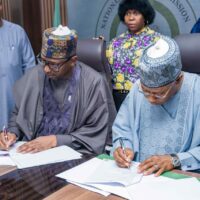
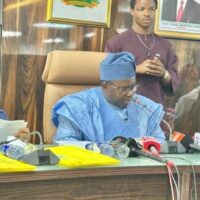
The Ondo State Commissioner for Education, science and technology, Professor Igbekele Amos Ajibefun, is facing intense scrutiny amid allegations of financial impropriety linked to multiple remunerations while serving in public office.
The controversy intensified following his admission that he collects sitting allowances from the University of Medical Sciences (UNIMED), Ondo, where he serves on the Governing Council.
Professor Ajibefun, recently appointed as a state cabinet member by Governor Lucky Aiyedatiwa, denied receiving salaries from UNIMED or any other public institution. “I do not collect salary from UNIMED. I am not a staff member of the university. I only attend council meetings,” he insisted.
However, the Commissioner confirmed that he receives statutory sitting allowances, describing them as lawful payments for participating in council meetings, typically held three times a year with occasional emergency sessions. “Yes, all members of the council collect sitting allowances. It is part of the law establishing these universities,” he said.
Despite defending the legality of the payments, Professor Ajibefun refused to disclose the total amount received since assuming office, prompting critics to question the transparency and propriety of the practice. .
The issue has sparked a broader debate among civil society groups and political commentators, with calls for the Ondo State government to provide clarity on the remuneration framework for public officials serving on governing councils.
It will be recalled that allegations of similar financial recklessness were previously raised against the Ondo State Oil Producing Areas Development Commission (OSOPADEC) under the same administration, where public officials were accused of mismanaging substantial funds.
The matter is still under investigation, with the Code of Conduct Bureau continuing its probe into the alleged irregularities, highlighting ongoing concerns about financial accountability within state agencies.
Whether the controversy reflects standard administrative practice or financial misconduct, it underscores growing demands for accountability and responsible management of public resources in the state.